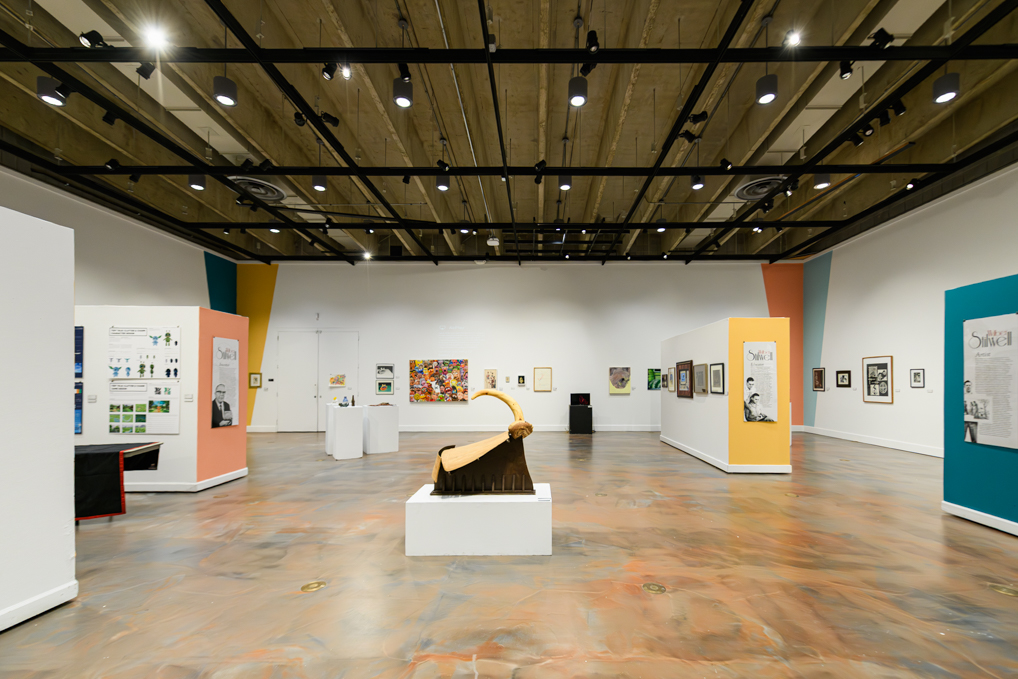
Through artistry, preparation, years of study, and tireless work, three University of South Dakota (USD) Master of Fine Arts (MFA) students debut their graduate thesis exhibition shows in Vermillion prior to graduation.
Surface Rhythms, Mariom Manjury Nishe’s MFA exhibition alongside Mariana Astete’s Reensamblaje, is on display from April 6-10 at the Warren M. Lee Center for the Fine Arts.
Dial Tone: Trouble with the Connection, Andrew Hembd’s exhibition, is on display from March 30 until April 2 at the same USD gallery.
Learn more about each artist and their inspiration.
SAVE THE (RECEPTION SHOW) DATE!
The MFA Thesis Exhibitions will be on display Monday through Thursday in their respective weeks with a reception to follow.
Mariana Astete
April 10 from 5-7 p.m.
Andrew Hembd
April 2 from 5-7 p.m.
Mariom Manjury Nishe
April 10 from 5-7 p.m.
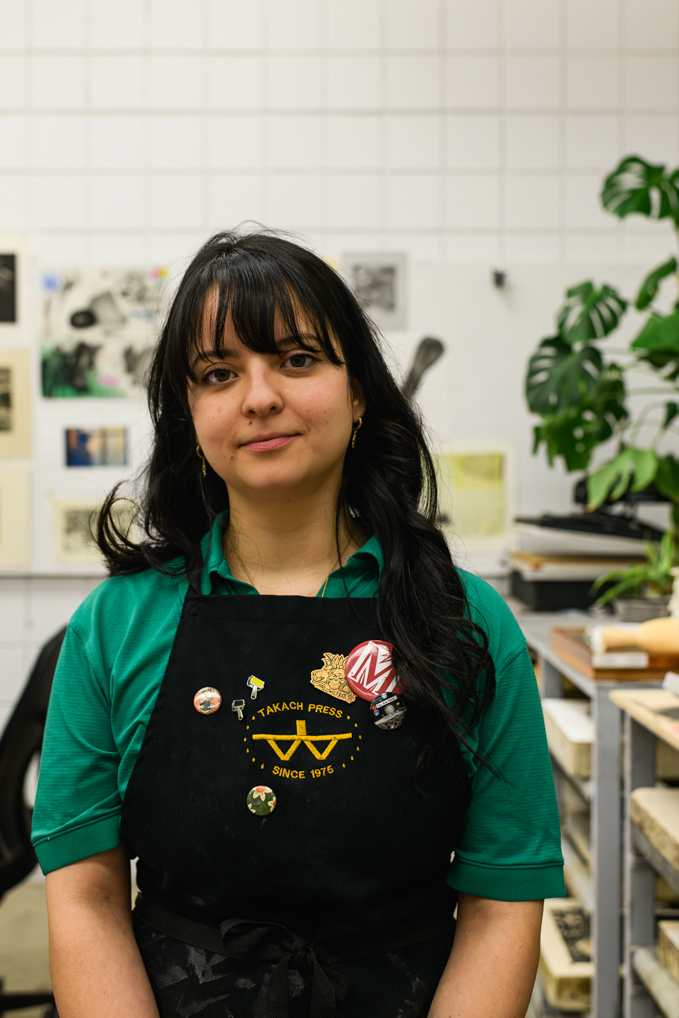
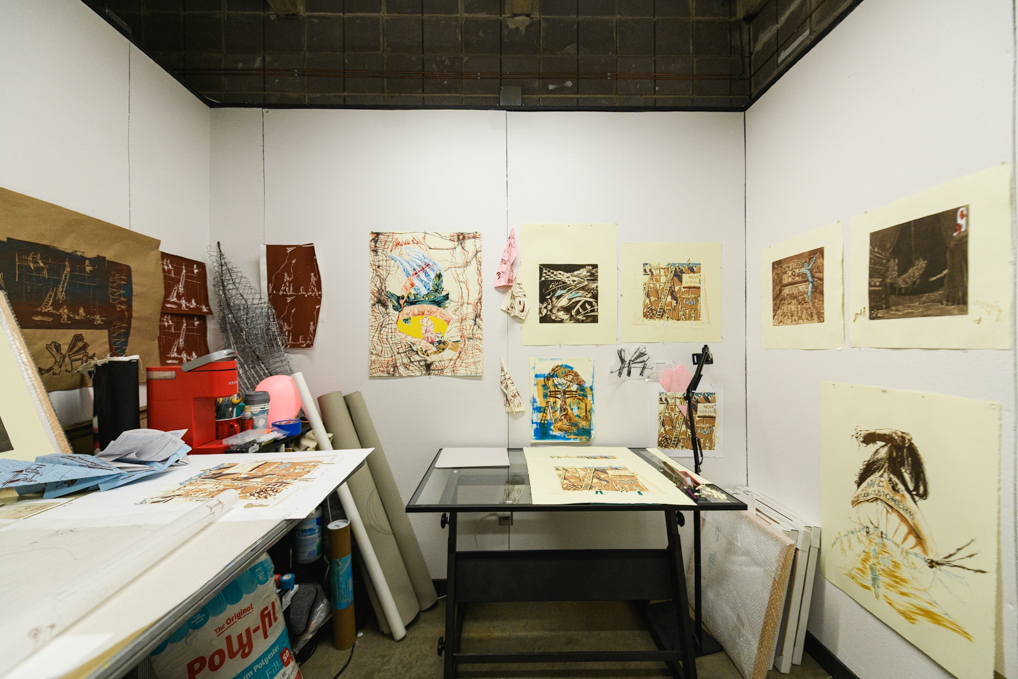
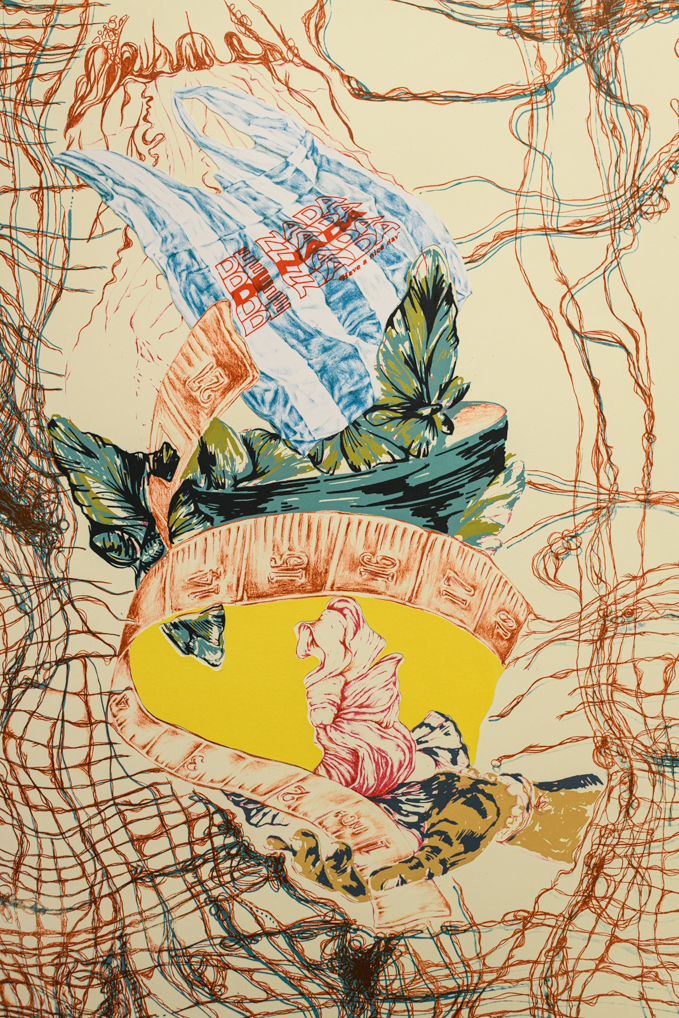
Mariana Astete | Reensamblaje
Astete’s process began with trying to understand her own story. Through education and her process creating, conceptual frameworks have evolved. As she makes her art, she reconstructs stories, representing the broader histories of the world.
“As someone who migrated from Chile to the United States, I found myself constantly negotiating identity, language, labor, and belonging,” said Astete.
“Printmaking became a way to physically dismantle and reconstruct those experiences.”
Inspiration for Astete comes from everyday environments, workers, bulletin boards, waiting rooms—any space that may appear ordinary, but carries with them systems of power and hierarchy.
“Reensamblaje centers on migration, printmaking, drawing, and cultural reassembly,” explained Astete.
“The show includes large-scale prints where small figures inhabit oversized environments…spaces that feel institutional and constructed.”
Reensamblaje is not just a title, it’s a condition, Astete clarifies. Living between languages, systems, and structures while finding a way to reconstruct yourself is what it’s about.
“I hope viewers leave the exhibition thinking more deeply about the spaces they move through and the people who built them—empathy to those people,” said Astete.
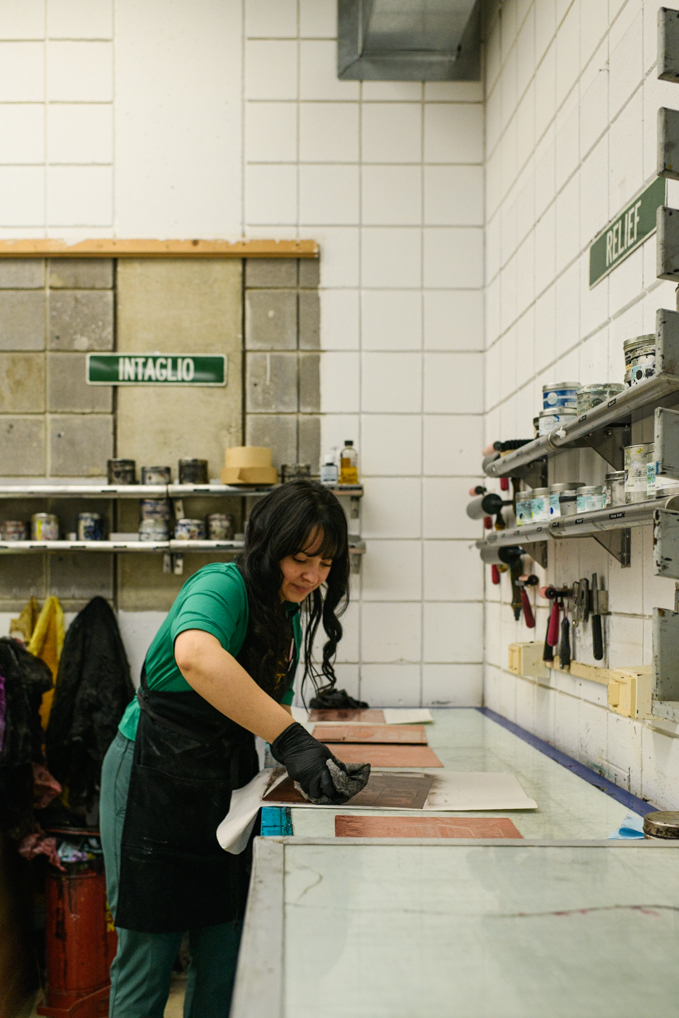
For the artist, the connection between the act of etching, cutting, and assembling materials with the themes of migration and identity are not only rooted in intention, but support one another.
“What’s most important to me is not centering myself too heavily within the work. While the pieces are rooted in my experience and discovery, I try to keep the figures and silhouettes simple and restrained.”
mariana astete
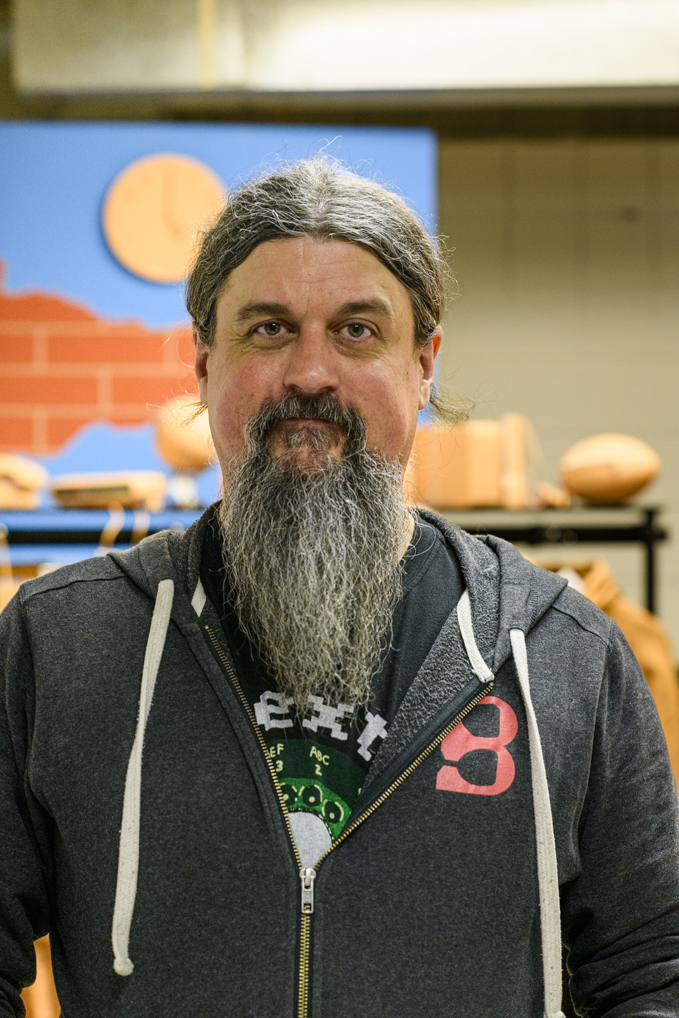
Andrew Hembd | Dial Tone: Trouble with the Connection
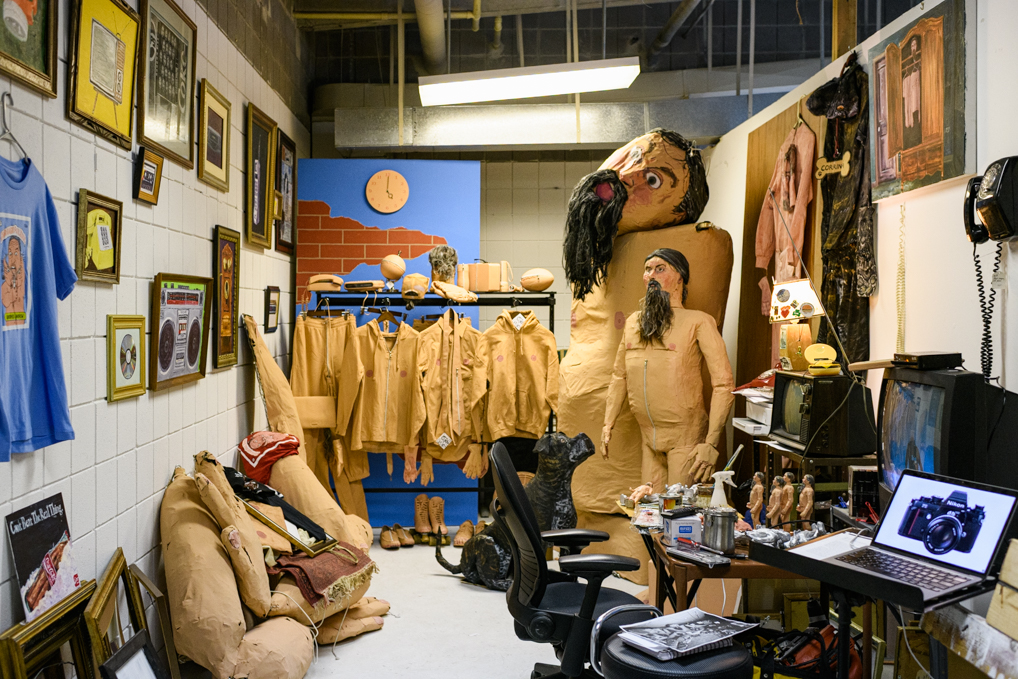
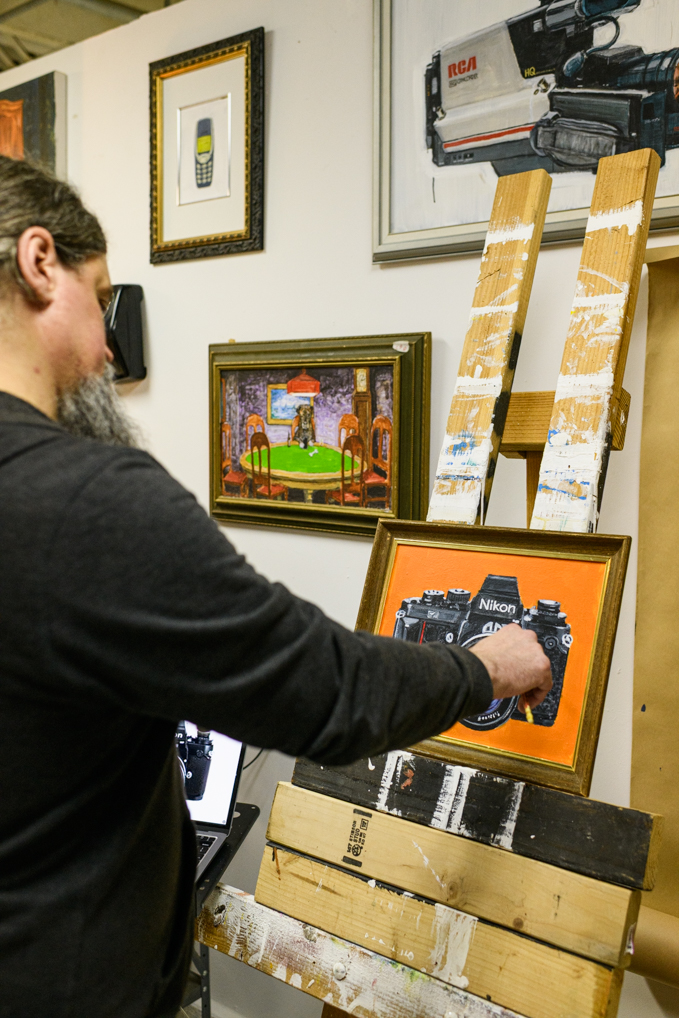
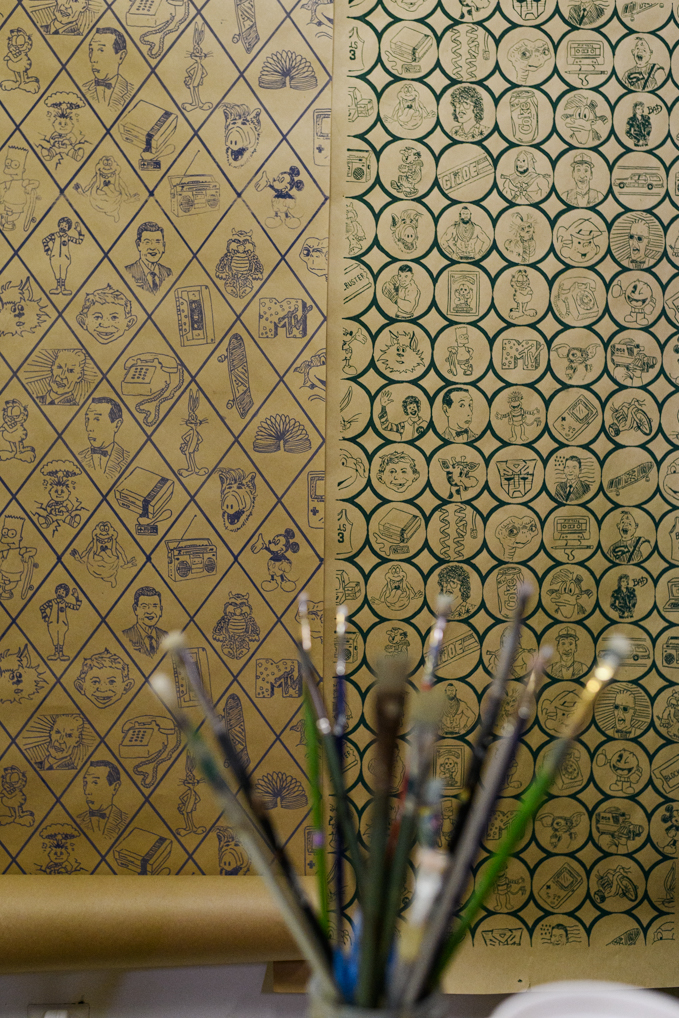
Hembd looks to technology of the 1980s and ‘90s as it relates to today’s tech landscape when creating. He ties in themes related to society’s attachment to social media and is informed by the role consumerism has played for the last five decades.
Hembd uses various mediums to communicate through including papier-mâché, screen printing, stop motion animation, and his favorite, acrylic paint. He also incorporates analog devices, displaying them alongside various pieces.
“My art has evolved organically over my time in grad school,” added Hembd. “I had recently lost a pet I was very close to, so that became a theme right away.”
His upcoming thesis exhibition installation, Dial Tone: Trouble with the Connection, critiques and explores the impact of consumerism and nostalgia “through an immersive, multi-room experience on our sense of identity and human connection.”
“This work is about the growing disconnect in a society where digital interactions increasingly replace physical and emotional ones,” elaborated Hembd. “The superficial connections fostered by our devices are contributing to a mental health crisis marked by isolation, aggression, and misinformation.”
Five distinct rooms will be constructed to evoke specific themes Hembd explores in his work, each one representing something different. Room themes include nostalgia and identity, the evolution of technology, social media and perception, branding and consumer culture, and finally, grief and disconnection.
“Woven throughout the exhibition are intimate pieces centered on the loss of my late dog. By using this personal narrative, the work is given a relatable human experience about loss, as death is a part of living,” described Hembd. “It’s symbolizing the deep genuine connections that are sometimes lost amid a hyperconnected, but emotionally distant world.”
“Now that I’ve had time to find out what’s important to me, I believe in being true to yourself and your creative process. Making art because you need to make it and not making it solely to please others.”
andrew hembd
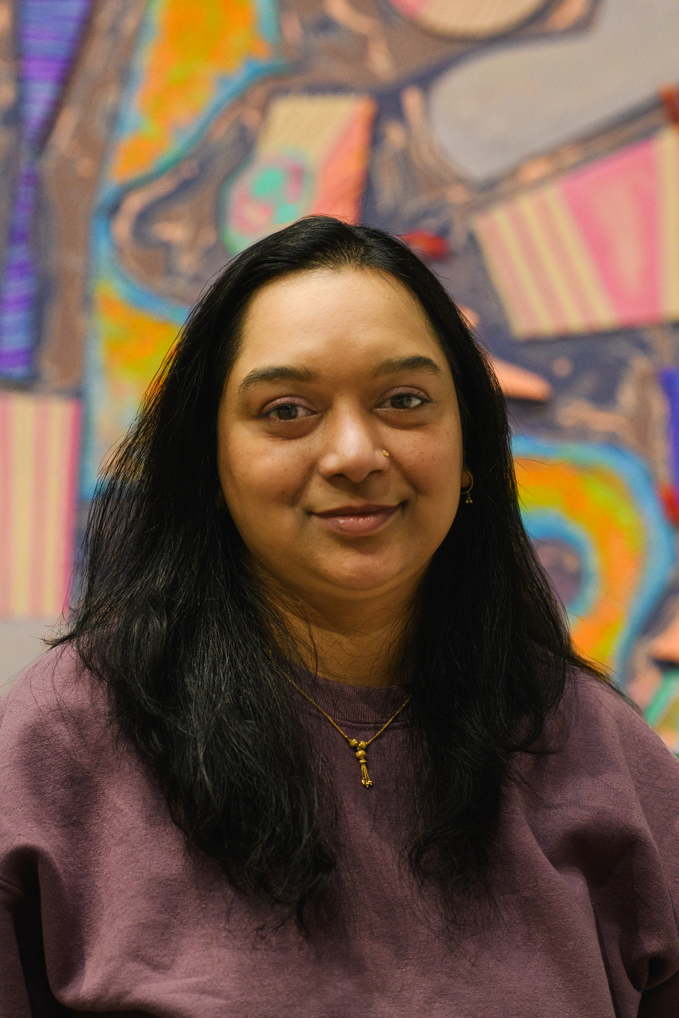
Mariom Manjury Nishe | Surface Rhythms
Nishe began her journey as a painter in Bangladesh, where she completed her bachelor’s and master’s degrees. She practiced both realism and abstract painting.
“Realism helped me understand structure, proportion, and discipline. But deep inside, I always felt more connected to abstraction,” revealed Nishe. “I was drawn to color, emotion, and the freedom it allowed.”
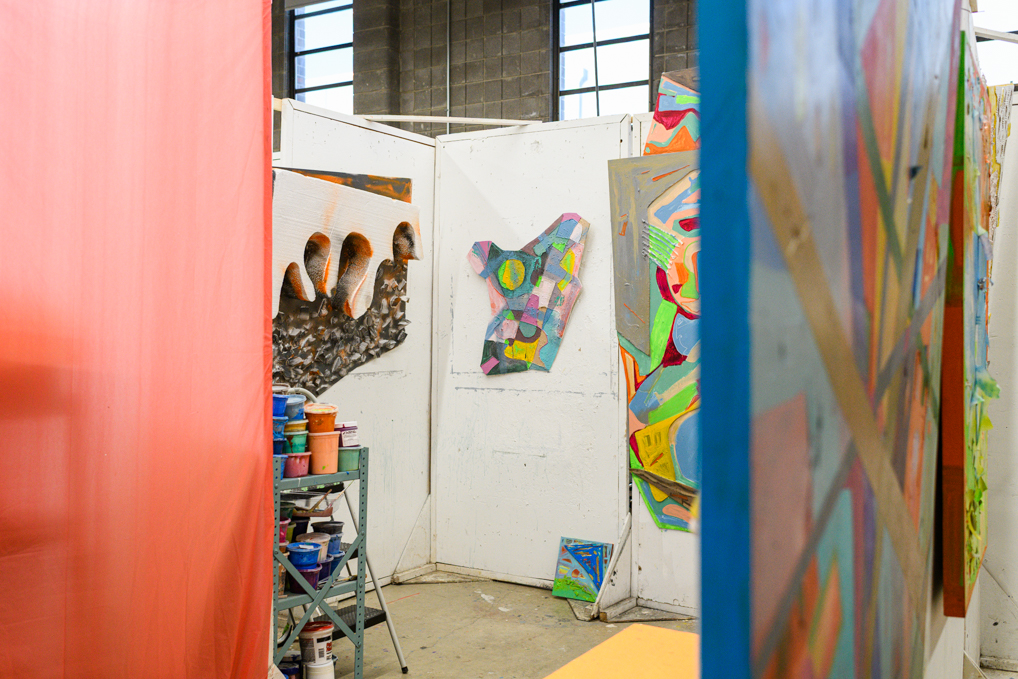
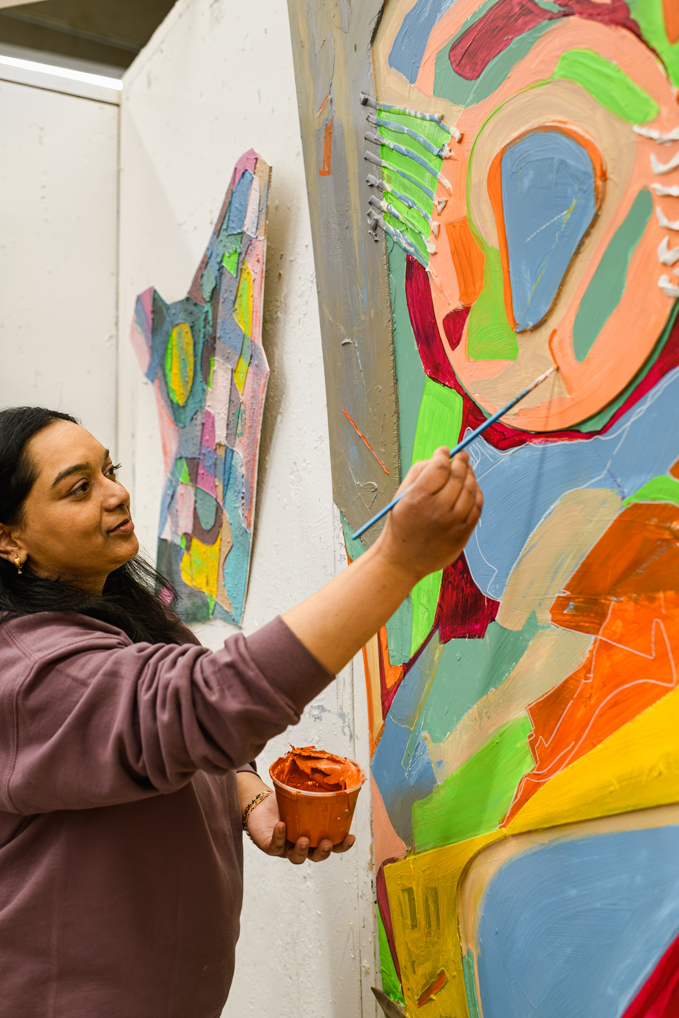
Nishe explores more than just color and gesture. While working with acrylic paint, foam and wood board, and forms of mixed media, she plays with sculptural form and how to cut, build, layer and reshape materials incorporated in her work.
“When I came to the United States and began my MFA at USD, something shifted,” said Nishe. “I started to question the flat canvas and the traditional rectangle.”
Emotion, memory, and cultural transition inform her process as she connects those themes to tension, balance, and growth, using unique shapes to communicate her art.
“Moving from Bangladesh to the United States changed how I see space and structure,” added Nishe. “I create to understand that shift.”
Nishe’s upcoming MFA exhibition focuses on surface as structure while incorporating bold color, edges, and textured surfaces.
The relationship between intuition and structure is essential for Nishe. The honest act of creating has allowed her to eloquently respond to material, rather than forcing an image to surface.
Her work transmits the dependence interior composition and physical structure have on one another.
“My style is abstract, layered, and dimensional—it feels energetic, but also reflective,” said Nishe. “The work balances tension and softness.”
“A major turning point was when I stopped protecting my paintings and allowed risk. Letting accidents stay changed my confidence as an artist.”
mariom manjury nishe
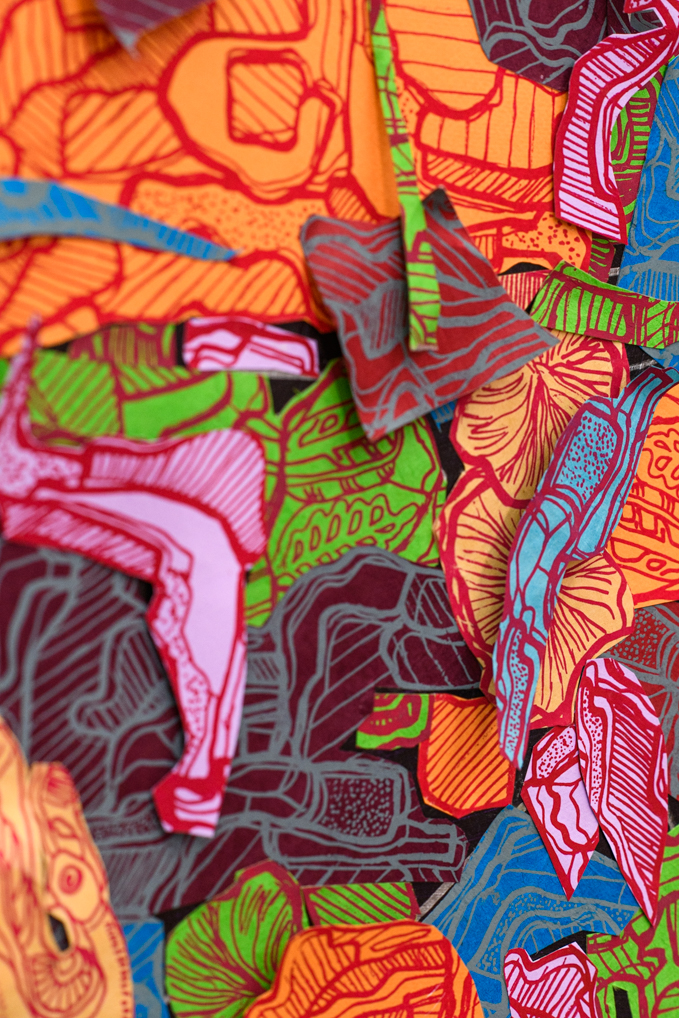
Mentorship at USD
To aid in their artistic development, each student is assigned a faculty advisor, helping mentor them through their schooling.
“Making art is like magic,” said USD department of art student advisor and associate professor Amber Hansen. ”You can make visible things you imagine, and you can help shape the world you want to live in.”
Hansen, specializing in painting, describes the creative, collaborative process as a way in which to dream of something bigger than ourselves, opening doors of opportunity, while uplifting and amplifying moments of leadership and contribution.
When we connect creative acts with people we care about, there’s a powerful, worthwhile language passed through one person to many, which helps build the fabric of the community we live in, Hansen adds.
USD department of art advisor and assistant professor Erin Wohletz, specializes in printmaking.
“If being a printmaker has taught me anything, it is the importance of community,” said Wohletz. “Every printshop I have ever worked in has been a community of artists who are constantly sharing their knowledge with their peers.”
“I hope one day college will be a free option to all students and that any barrier that exists for students to study and pursue careers in the arts will have access to that.”
amber hansen
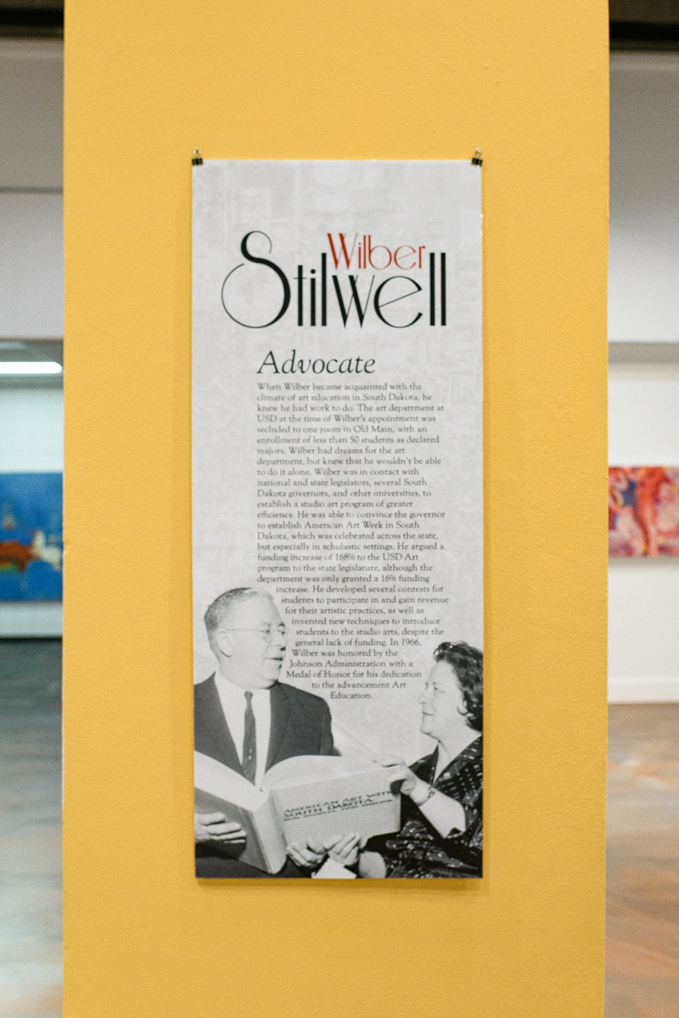
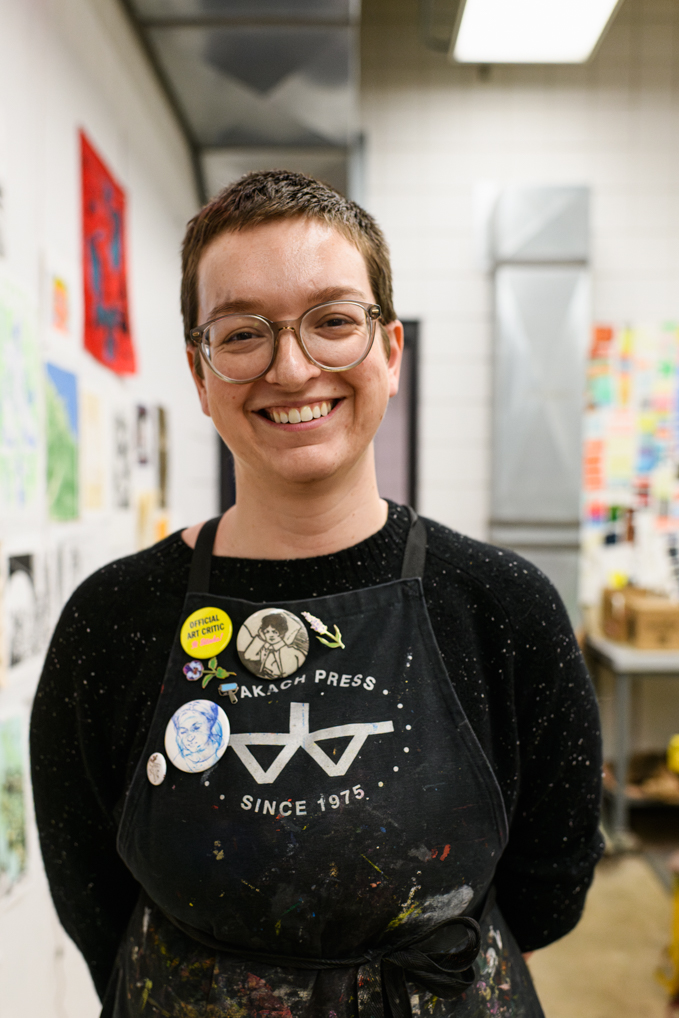
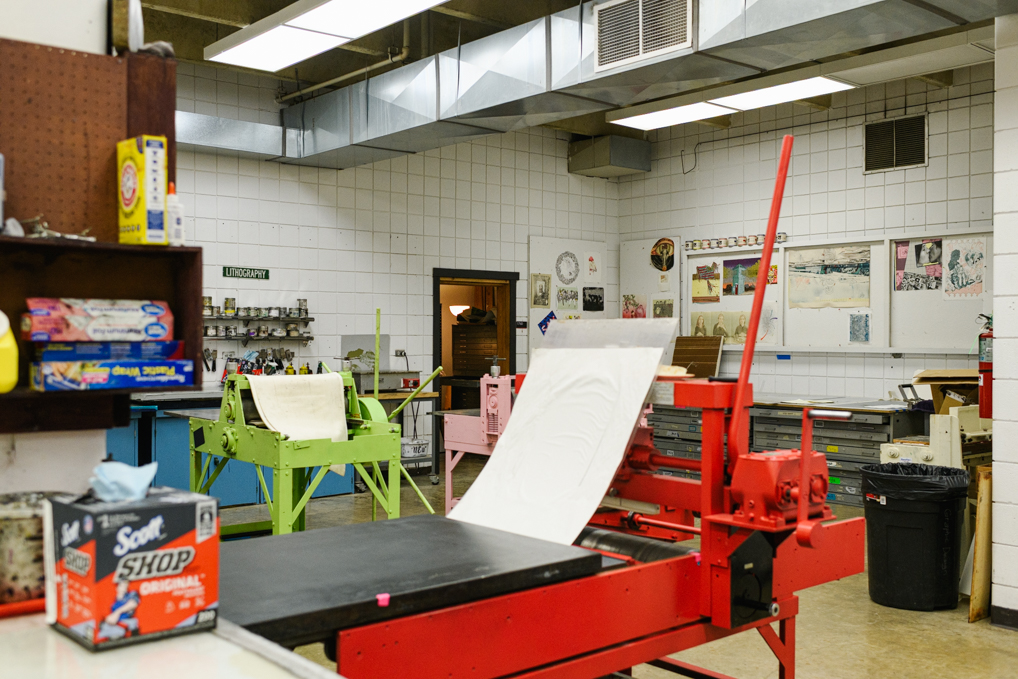
Wohletz says each student identifies specific goals and unique subject matters they aim to showcase within their art practice.
“My priority is to help students communicate their unique thoughts and skills as clearly as they can through their art, verbally, and through writing,” added Wohletz.
Wohletz’s favorite moments in teaching consist of the electric times when students are genuinely surprised by what they’re able to accomplish.
“Their excitement, hard work, and energy in the art building is infectious and inspires me in my own artistic research,” revealed Wohletz.
For Astete, Nishe, and Hembd alike, their time at USD has shown how important mentorship and communal engagement is, while describing it as an essential part of artistic development.
“When you put your work forward in an environment where faculty are actively practicing artists, the standard shifts,” added Astete.
UNDERGRADUATE ART PROGRAMS
AT USD INCLUDE:
Art Education
Arts in Health
Ceramics
Graphic Design
Painting
Photography
Printmaking
Sculpture
GRADUATE ART PROGRAMS
AT USD INCLUDE:
Art
Arts in Health
Graphic Design
Painting
Photography
Printmaking
Sculpture
FOR MORE INFORMATION, VISIT USD.EDU+