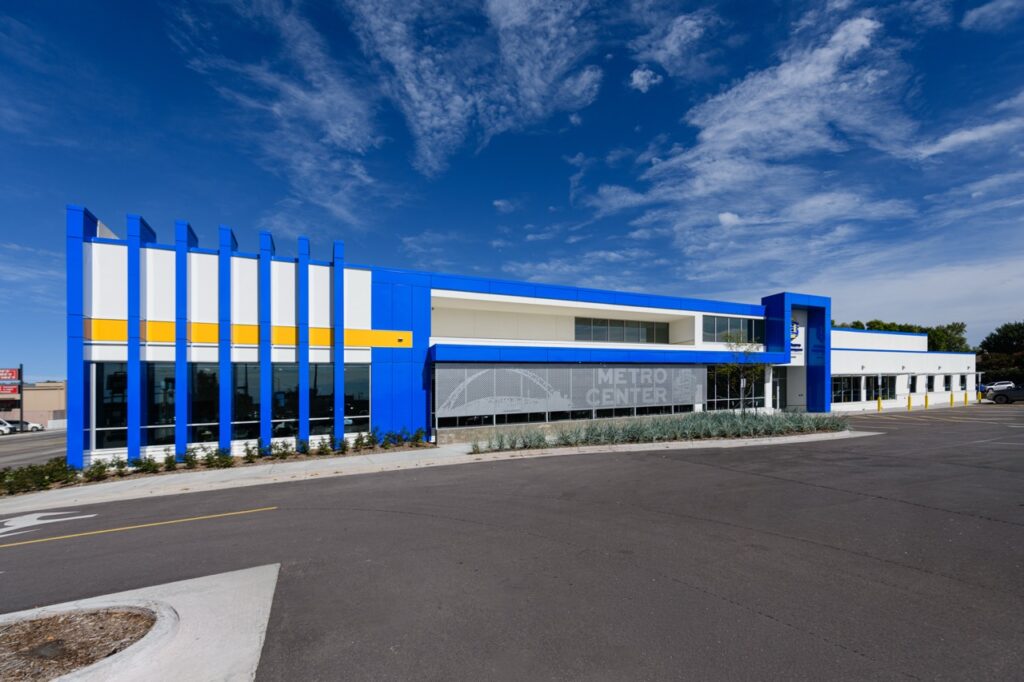
Study space, on-site advisors, innovative technology, classrooms for active learners, and much more are all available to students at the new South Dakota State University (SDSU) Metro Center in Sioux Falls.
For almost 30 years, the SDSU College of Nursing, College of Pharmacy and Allied Health Professions, and Respiratory Care students have been learning in separate facilities in Sioux Falls. In those three decades there’s been growth, expansion, and an evolution of programs—the necessity for more space became apparent.
In 2024, Avera Health gifted the SDSU Alumni & Foundation the new space that would become the Metro Center, which was formerly a grocery store and medical equipment facility. The renovated education complex opened this past September just in time for the new semester right in the heart of the city at 33rd Street and Minnesota Avenue.
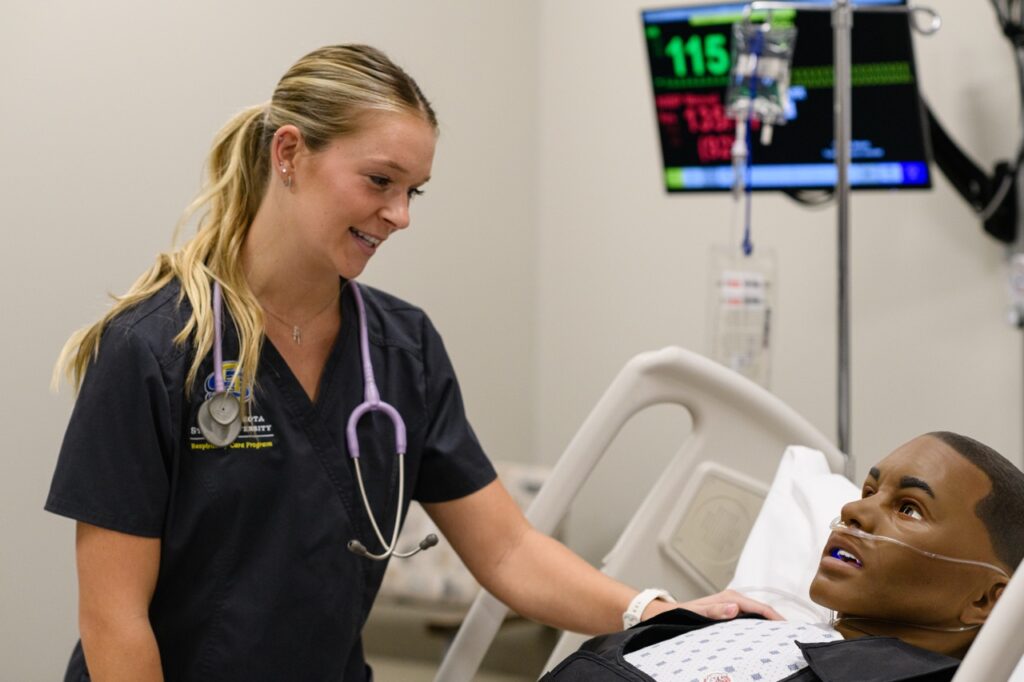
Assistant professor and Healthcare Simulation Center (HCSC) director Alyssa Zweifel Ph.D., RN, CHSE says various simulation-based learning modalities are deployed, utilizing manikin-based standardized patient and multi-modality scenarios, along with virtual reality, screen-based, gaming, and telehealth simulations.
Space to Learn
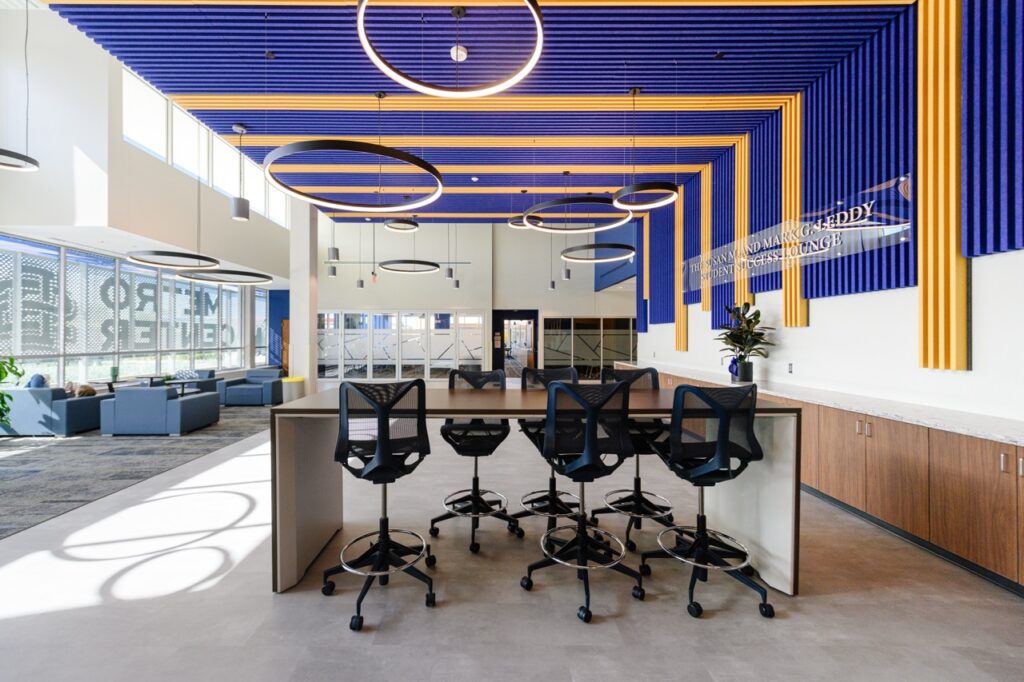
The Metro Center encompasses over 44,000 square feet.
According to Zweifel, the new onsite scenarios and simulations have gained international attention. Through presenting at conferences, being in publications, participating in multi-site research studies, and active involvement in international healthcare simulation societies, their educational practices have also become world-renowned and recognized.
The aforementioned societies include Society for Simulation in Healthcare (SSH), International Nursing Association for Clinical Simulation and Learning (INACSL), and the Association of Standardized Patient Educators (ASPE).
With full accreditation through the Society for Simulation in Healthcare in Teaching/Education since 2022, the HSCS allows for students to practice skills and experience real-life healthcare situations in a controlled, safe environment.
“Ensuring we can train future healthcare professionals to be practice-ready and support patient safety at the same time is so important to nursing education,” added Zweifel.
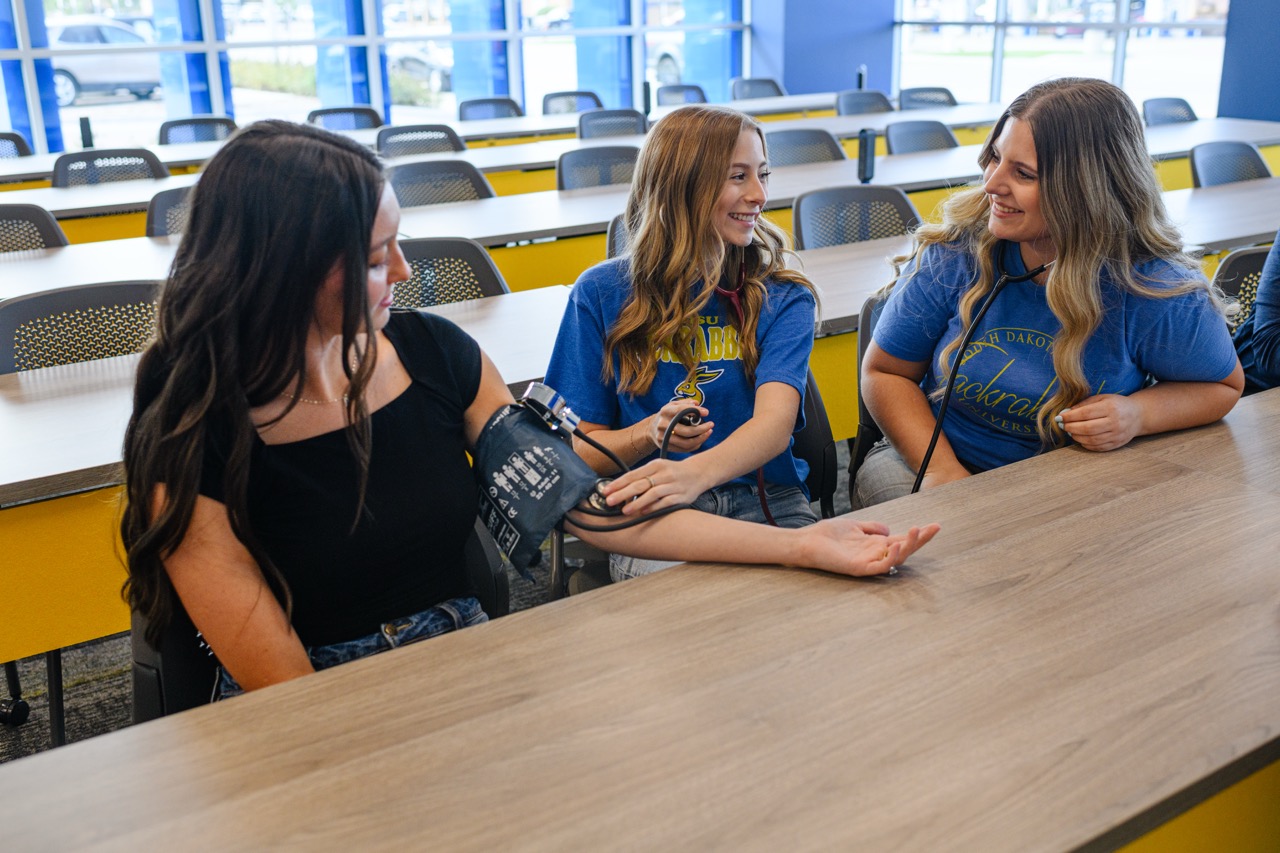
Led by experienced facilitators, the simulation scenarios provide students with an active learning environment to practice care while learning from one another. Simulations are followed by a debriefing session allowing for further reflection, discussion, and a solidified understanding of what they experienced.
“Simulation-based learning guarantees experiences we cannot guarantee students will get during clinical experiences—some they might not even see in their first year of nursing practice,” said Zweifel.
Students experience various limitations when practicing in healthcare settings, including access to specific diagnosis or patient situations, limited clinical sites and nursing faculties, and nursing shortages, resulting in less time for students on the units actively learning.
Assistant dean for cooperative programs, Robin Arends DNP, CNP, FNP-BC, PMHNP-BC, says the Metro Center diligently creates more opportunities for students, while actively responding to the ever-changing workforce needs.
“Students have more opportunities for hands-on learning and are exposed to a variety of technologies designed to enhance their educational experience,” said Arends. “These changes have created a more interactive and application focused learning environment, better preparing students to demonstrate competence and transition successfully into the workforce.”
Arends describes a shift in academics toward competency based learning, where students demonstrate their ability to integrate knowledge, applying it through practical skills rather than proving factual knowledge on exams. The Metro Center creates an interactive learning environment, offering more chances for hands-on learning and exposure to new technology.
Students are able to earn their BSN through two different tracks based on their educational background and previous preparation, which allows for greater flexibility and access, according to Arends. Standard and accelerated programs are available, along with master degrees, DNPs, and PhDs.
“Access to education is essential for students to successfully complete their programs of study and achieve their professional goals. The Metro Center helps expand that access.”
ROBIN ARENDS
EDUCATIONAL PATHWAYS FOR STUDENTS AT THE
SDSU Metro Center
Nursing: BSN, DNP, MSN, PhD, Undergraduate, Graduate Certificates, Medical Laboratory Science, Phlebotomy.
Pharmacy: Pharm.D., Pharmaceutical Sciences, Community-Based Pharmacy Residency.
Public Health: Biostatistics, Environmental Health, Epidemiology, Health Services Administration, Social and Behavioral Sciences, Respiratory Care.
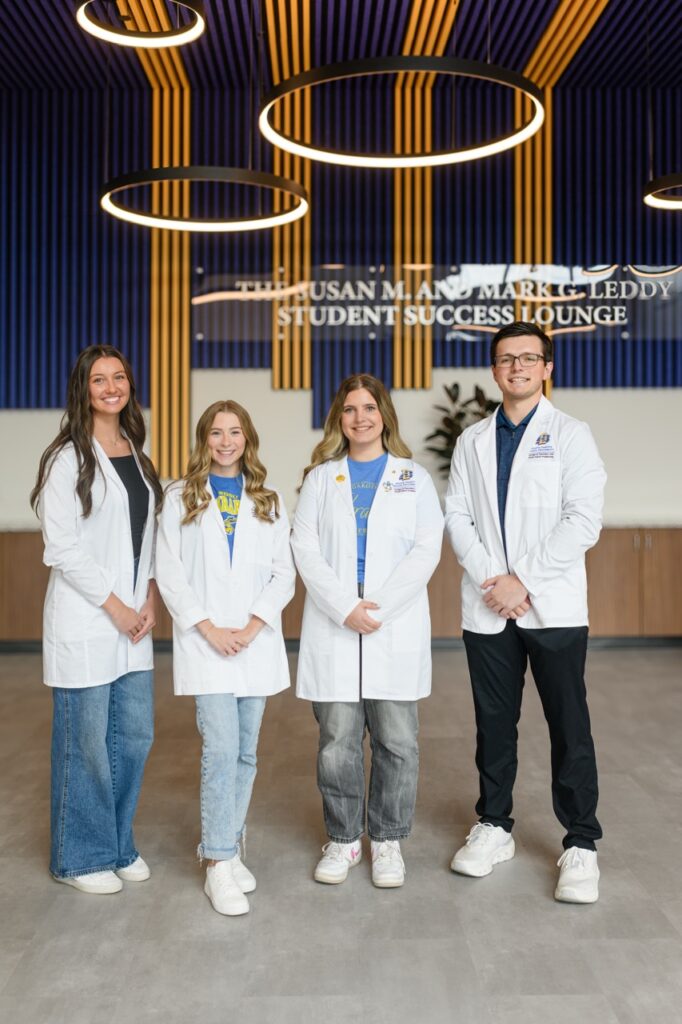
Peer collaboration accompanied by up-close skill development, high-tech classrooms, and direct access to academic counselors and faculty are all vital components of how the Metro Center functions.
“Students benefit from increased interaction with colleagues in the College of Pharmacy and Allied Health Professions, supporting interprofessional learning,” said Arends. “In addition, the Metro Center will serve as an important access point for individuals interested in pursuing careers in health-related fields.”
The collective, team-based nature of the Metro Center helps strengthen and build deeper partnerships throughout the community beyond Brookings and across disciplines, not only uplifting students, but the level of care students will provide as eventual professionals.
Associate dean for student services Jim Clem, Pharm.D. is in his 35th year as a College of Pharmacy and Allied Health Professions professor. He says the new center is a game changer for the programs.
“The design of the spaces in the building was not only planned for current educational needs, but also for adaptation for future education delivery approaches,” clarified Clem.
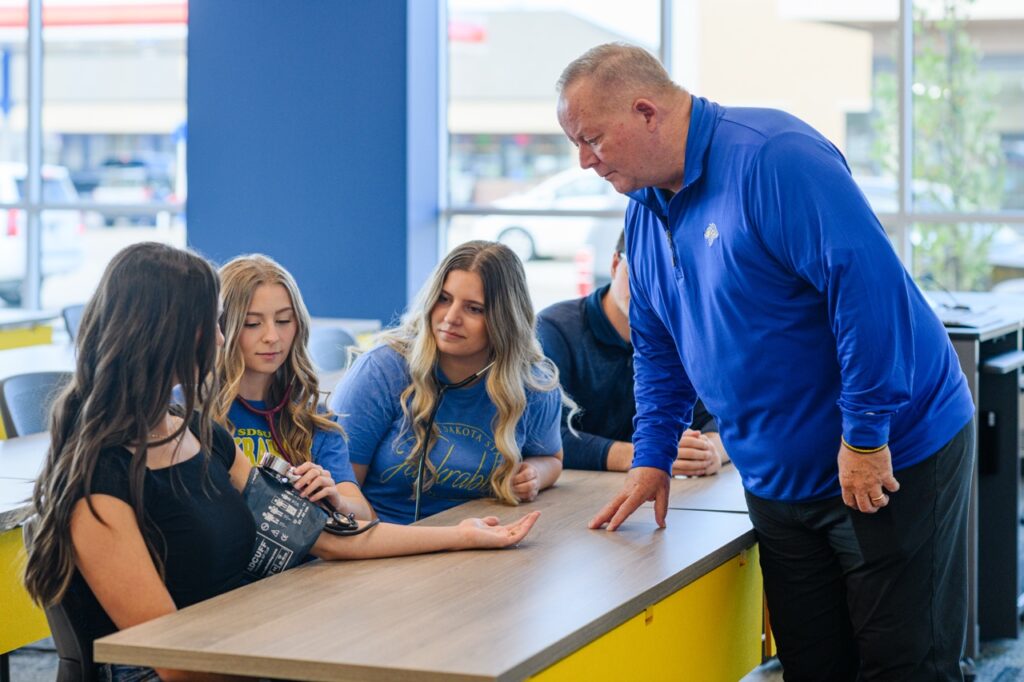
The pharmacy program, which has had a presence in Sioux Falls since 1997, greatly benefits from the ability to send students to community and hospital pharmacies in the Sioux Falls region during the third year of the program, Clem says. This allows students to apply what they learned in a real world environment.
“One of the things I truly cherish about our college is the excellence our students and graduates have achieved over the years,” said Clem. “Our pharmacy students are some of the best pharmacy graduates in the nation.”
According to Clem, SDSU leadership knew more space was needed for the health care education programs and wanted the programs to learn at a single location.
“Through their strong leadership, we are now enjoying the benefits of their vision,” added Clem.
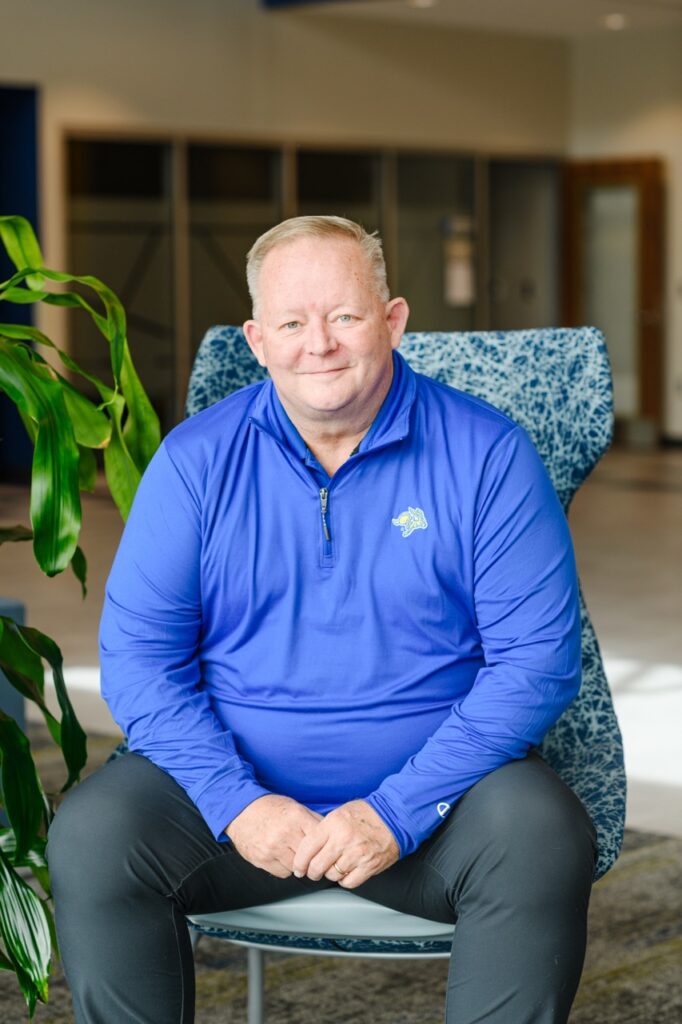
“One of the most rewarding aspects of my role is helping students achieve their dreams and lifelong career goals.”
Jim Clem
FOR MORE INFORMATION, VISIT SDSTATE.EDU+