Murals of all varieties and colors continue to appear across South Dakota.
Every mural, it seems, has a purpose, but no matter the original intention, each viewer may have their own interpretation.
605 ventured to just some of these public canvases to learn about the people behind the paint and to see how murals have affected the communities surrounding them.
The Black Hills: An Everchanging Canvas
Perhaps one of the most recognizable public art displays in the state is Art Alley in Rapid City. No two visits to the several blocks are the same, as the space is constantly seeing new artwork.
With a permit from The Dahl Arts Center, any street artist can make a statement on the walls, making connections in the process.
“There is definitely a community around it with particular artists who have worked there regularly,” said Katie Wolff, education coordinator at The Dahl. “It’s a space for people to connect with something that resonates with them.”
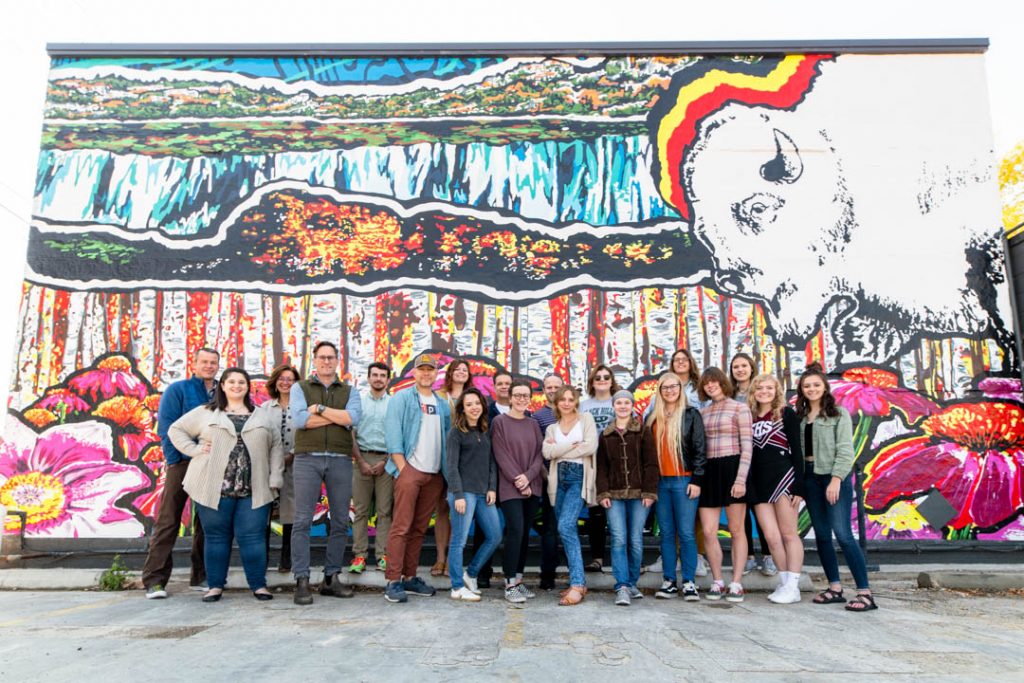
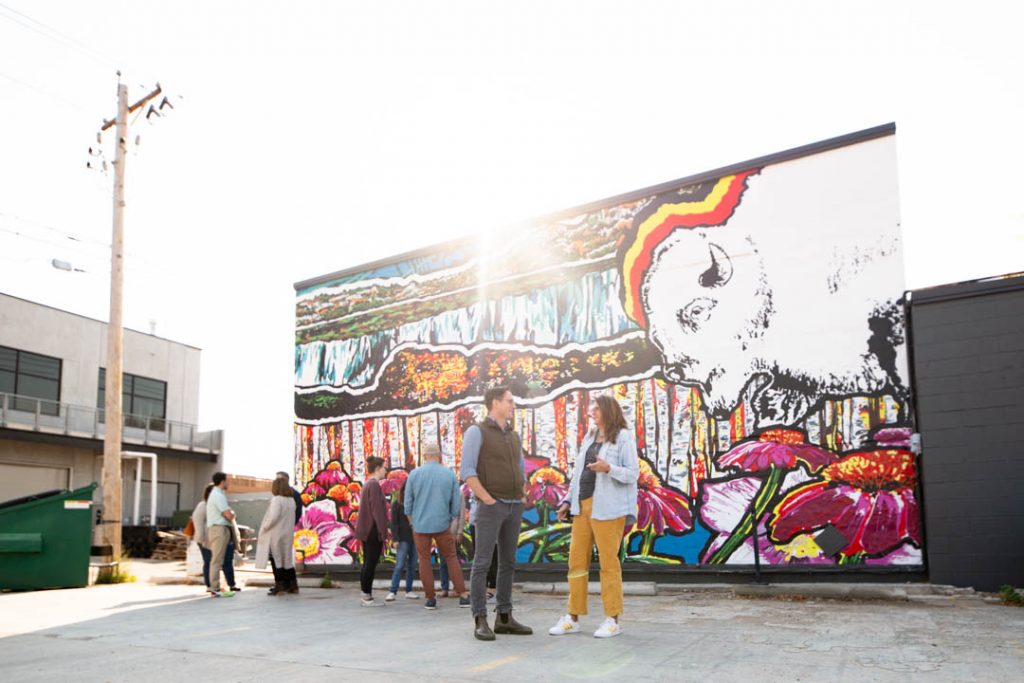
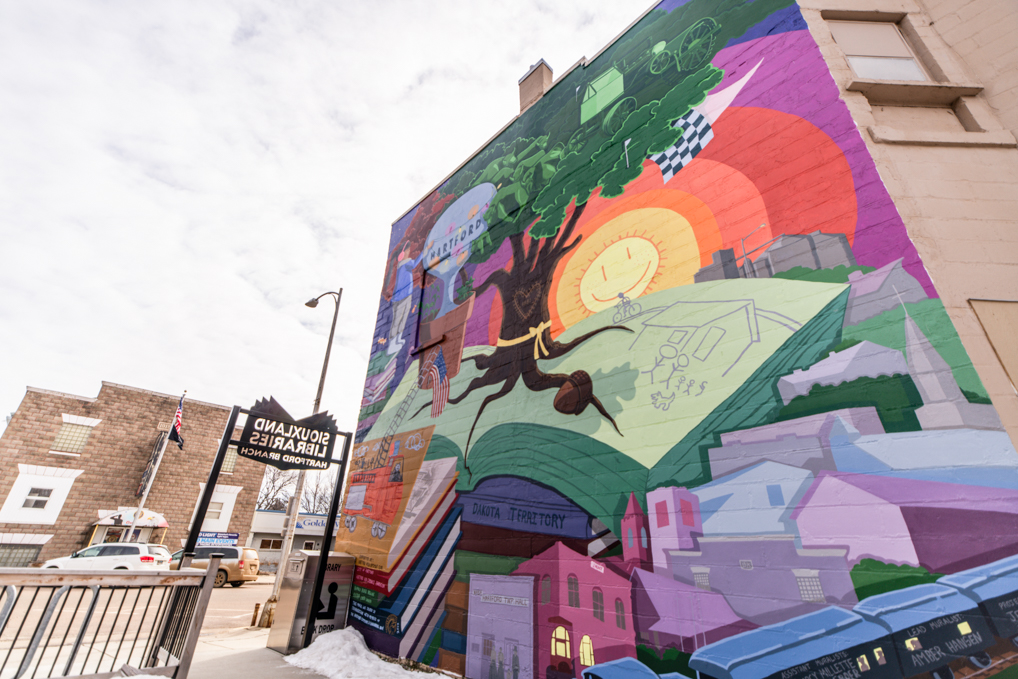
Not far from Art Alley, Spearfish has art to offer, too. Black Hills State University (BHSU) students painted murals with the community’s help, learning valuable skills along the way (pictured above).
“I think in the end we calculated over 500 people had their hands in [the project] at some point,” said art professor Desy Schoenewies. “We learned how to talk to business owners all the way down to learning property and zoning rules.”
Wolff, BHSU art intern and student at the time, says she was part of the process.
DID YOU KNOW?
The BHSU student murals were painted on multiple sections of parachute cloth before being later installed at their current location.
“We based it around the layers of Spearfish and did that using all of the natural elements in the canyon, different types of wildflowers, the white buffalo for the Native American people,” she said. “That was kind of our design goal.”
Schoenewies says that the group wanted to bring something lasting to Spearfish, but that the mural shouldn’t be permanent.
“I hope someday somebody decides to paint over our mural and do something different,” she expressed. “Art in the public sphere should be transformative and [continuously] changing and evolving.”
FOR MORE INFORMATION, VISIT ARTALLEYRC.COM AND BHSU.EDU.
Sioux Falls: Beyond Beautification
Last year, artist Zach DeBoer painted the “Greetings from Sioux Falls” mural, one of five murals he says were meant to “beautify the area” downtown.
“It’s a very simplistic thing to just say that [murals] are pretty,” explained DeBoer. “Murals are an important part of placemaking, and they help tell the story and history of the place. They invite people in and make people feel comfortable and safe.”
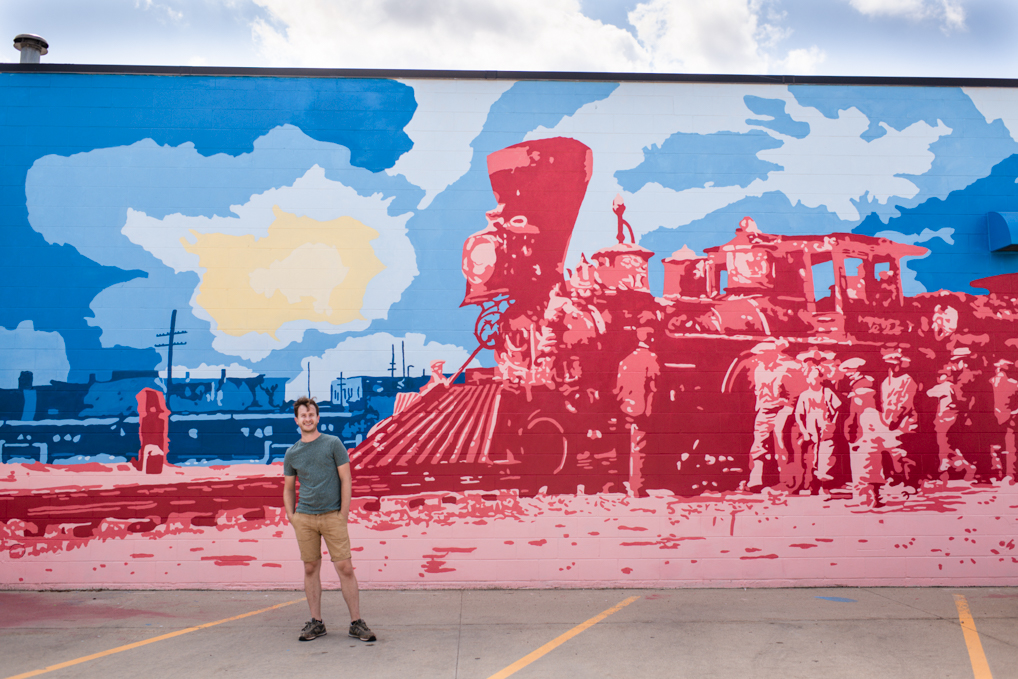
DeBoer says he feels that public art often makes a place more recognizable to visitors, making them realize, “I’m not just in any city. I’m not just in any strip mall. I’m in this place.”
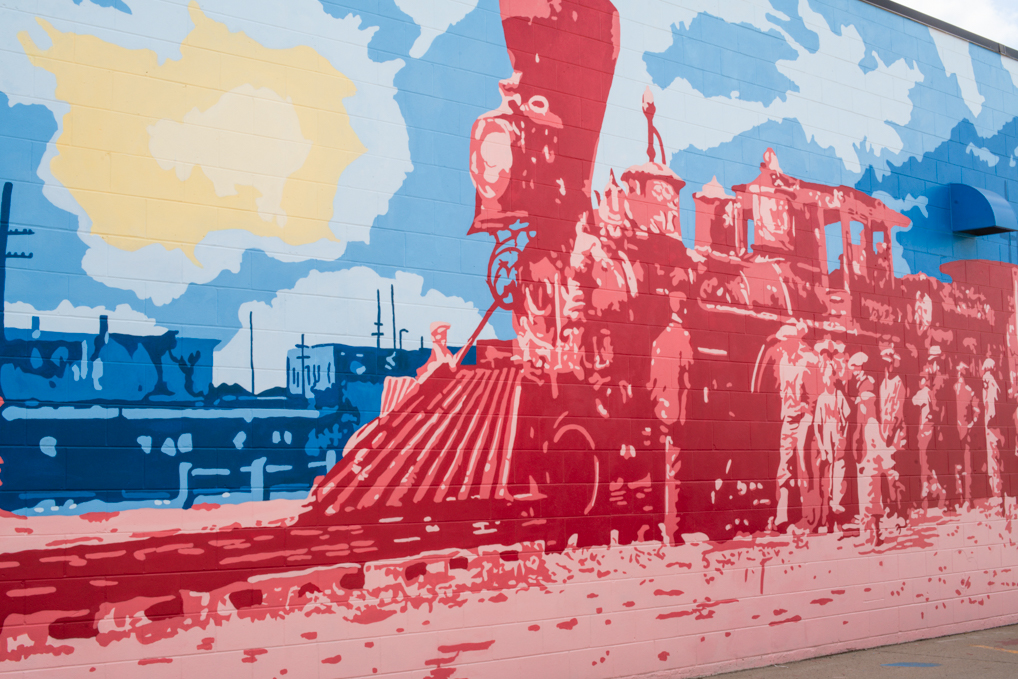
The most recent mural DeBoer finished is on Monks Ale House, which is a depiction of a historic photo of a train that passed long ago.
“Murals are great ways to activate and reactivate places,” he said. “They have a huge impact on the economy and people’s general well-being.”
DeBoer also has painted murals in various other locations across the state, including Clear Lake, Huron, and Faulkton.
FOR MORE INFORMATION, VISIT ZACHDEBOER.COM.
Faulkton: Elevating Tourism
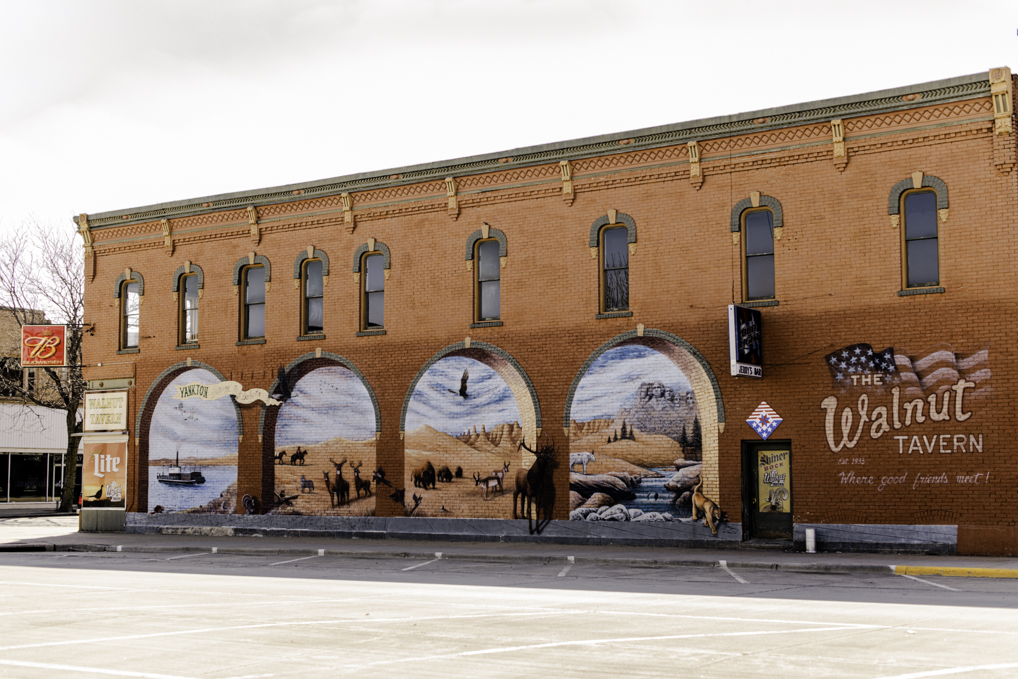
Tourism is important for many small towns in South Dakota, and one of Faulkton’s biggest attractions is on the side of a grain elevator. It depicts photorealistic, larger-than-life people, with various hats blowing in the wind next to them. In 2018, Australian artist Guido van Helton finished the mural.
“In terms of the financial impact, it’s just unbelievable the traffic we get through the town,” said project facilitator Dave Hedt, who is also from Australia. “We had a woman from Washington state fly all the way [here] just to see it.”
According to Hedt, something special about van Helton’s murals is his artistic process.
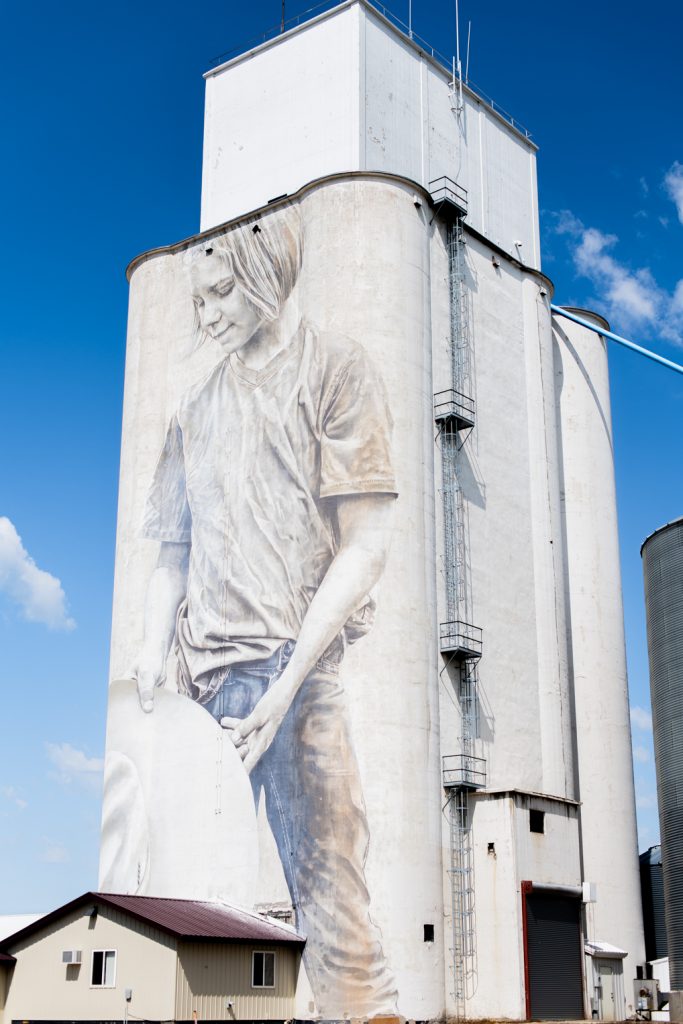

“Guido came and painted, and no one knew what he would paint,” recalled Hedt. “He lives in a community for four to six weeks before deciding what to paint based on how he feels the community is.”
PRESIDENTIAL PAINT
According to Dave Hedt, the paint used in the Faulkton mural is the same type used on The White House.
Hedt says that though van Helton never says exactly what his design represents, the community has their own interpretation.
“The general consensus is that what he found in this community is that it takes a lot of people doing a lot of things to make small communities run,” explained Hedt. “People had to wear a lot of different hats to make the community go ‘round.”
FOR MORE INFORMATION, VISIT FAULKTONSD.COM.
Brookings: Culture in Brush Strokes
Whether it be onto windows or even inside the library, the public art scene in Brookings is continuing to expand.
“Brookings Public Art Commission has been very encouraging of what we’re doing,” said Ashley Ragsdale, executive director of the Brookings Arts Council. “We want to create a hub where people want to go and look at the arts and culture downtown, but also want to shop, eat, and immerse [themselves] in the cultural life of Brookings.”
The community and businesses alike have been behind the move, supporting the artwork and the process, according to Ragsdale.
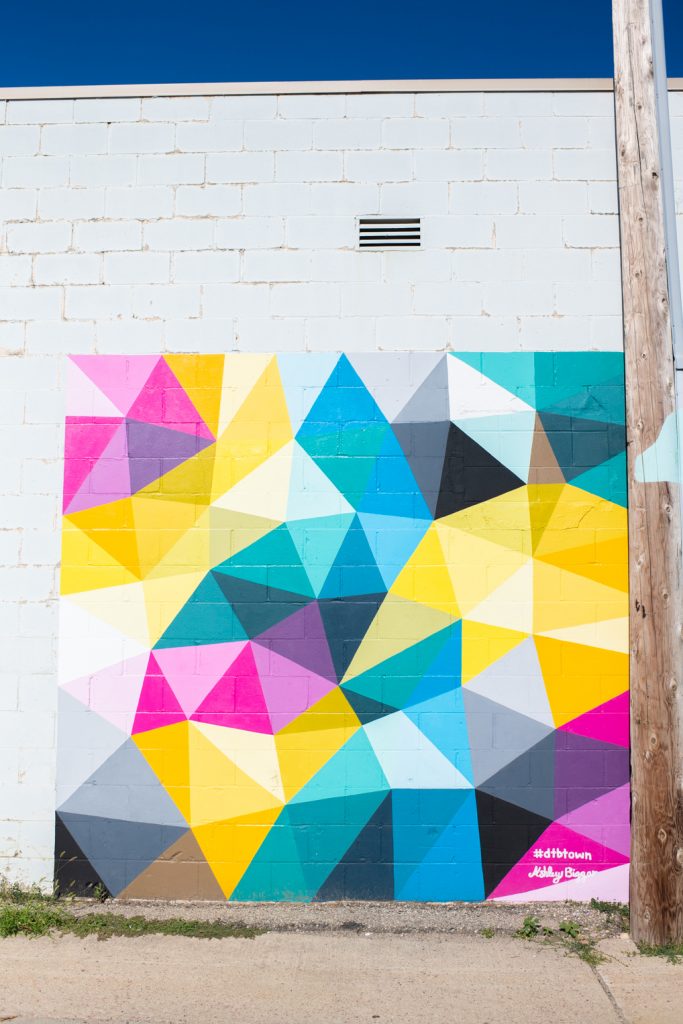
“As an artist as well, I think it’s really cool to be able to pitch an idea and have full support from all parties involved,” explained Ashley Biggar, director of Downtown Brookings and member of the Brookings Public Arts Commission. “It’s very inviting to be innovative in Brookings.”
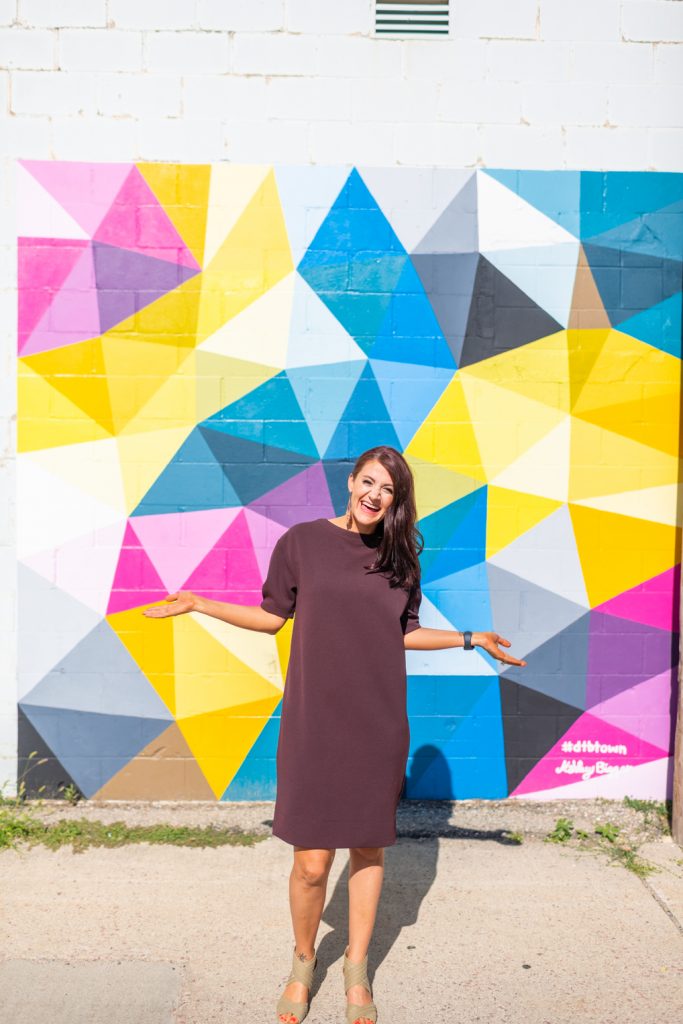
And they say the community has been enjoying the art. Many people stop to take pictures in front of it, featuring it on social media with various associated hashtags.
“It’s great exposure for us,” said Ragsdale. “It’s public art, which makes our downtown even better, and we love being able to give artists the opportunity to express themselves here in Brookings.”
FOR MORE INFORMATION, VISIT BROOKINGSARTCOUNCIL.ORG AND DOWNTOWNBROOKINGS.COM.
Vermillion: Restore and Connect
Behind the Coyote Twin Theater in Vermillion, bright colors bring together elements of a two-part mural starting with a woman in front of the night sky looking over an abstract South Dakota landscape.
Front and center on the adjacent wall is an indigenous woman nursing two babies. She floats above a banner written in the Lakota language that lead artist Reyna Hernandez says reads Eunkíčhetupi, meaning “We are restored.”
Hernandez says she met with many partners and the community to come up with the concept for the mural, hoping to tell the story of the human experience.
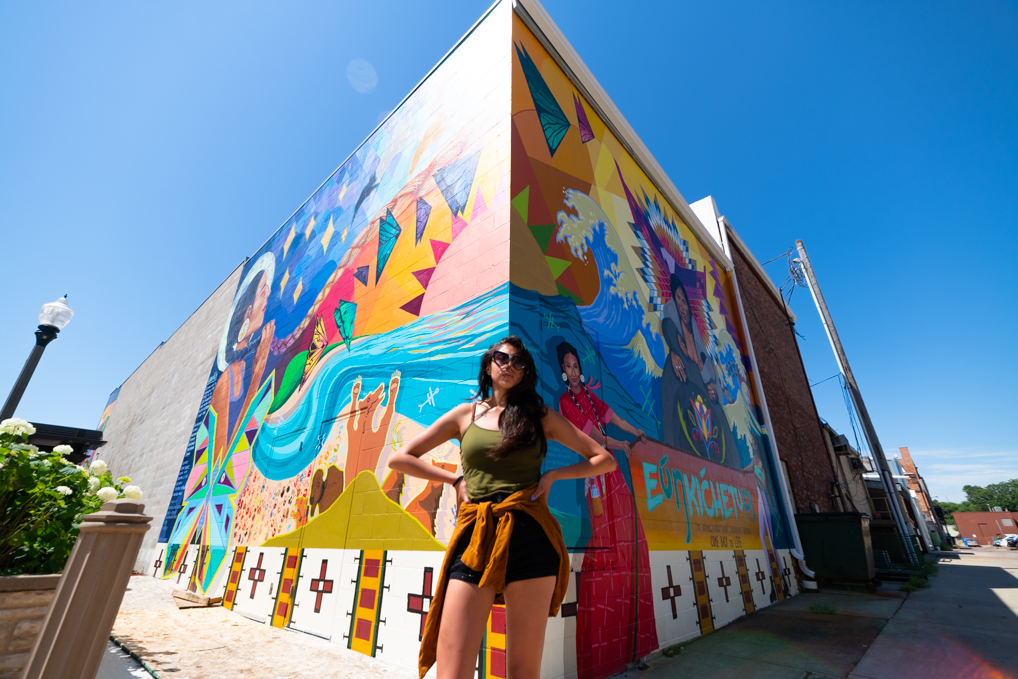

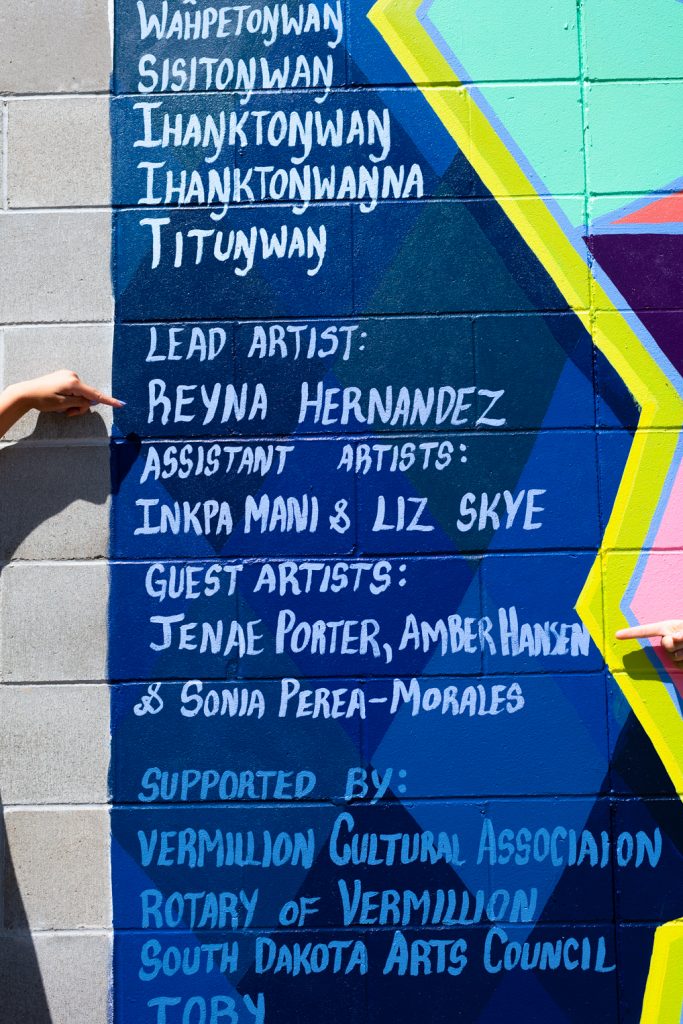
“People were talking a lot about restoration, and we thought about that in terms of how indigenous people have been fighting for this restoration of culture and a restoration of an accurate history and who we are,” explained Hernandez.
Connections between the community and art was the focus of the mural, according to project facilitator Amber Hansen.
“The artists would lead and guide workshops with the community to see what they wanted portrayed, and then translate that through their creative and artistic lens,” said Hansen.
DID YOU KNOW?
The theme of the second half of the Vermillion community mural is Wanáhča, which is Lakota for “to bloom.”
And after many discussions, the collage came together.
“What started to happen is we started to tell the Sioux creation story with the images we were putting together,” said Hernandez. “It was really cool because it wasn’t intentional, but it became very universal.”

Hernandez says she wanted to ensure that no one was left out of the story. For her, part of that representation was to bring women into the conversation.
“I know how it feels to not see myself represented in things,” explained Hernandez. “As soon as we put the images together, it started to tell our own story. It was like it all connected.”
FOR MORE INFORMATION, VISIT REYNAHERNANDEZART.COM.
A Splash of Color
From a simple concept to the final product on a wall, it seems murals can’t be ignored.
In many ways, public art is bringing more colors to the places it appears. And as a result, people are slowing down to take in the art that is now, more than ever, a part of South Dakotan culture.
Whether a mural represents something grand to its viewers or it simply makes a good background for a picture, each one that goes up makes an impact on the community around it in one way or another.