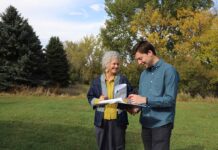
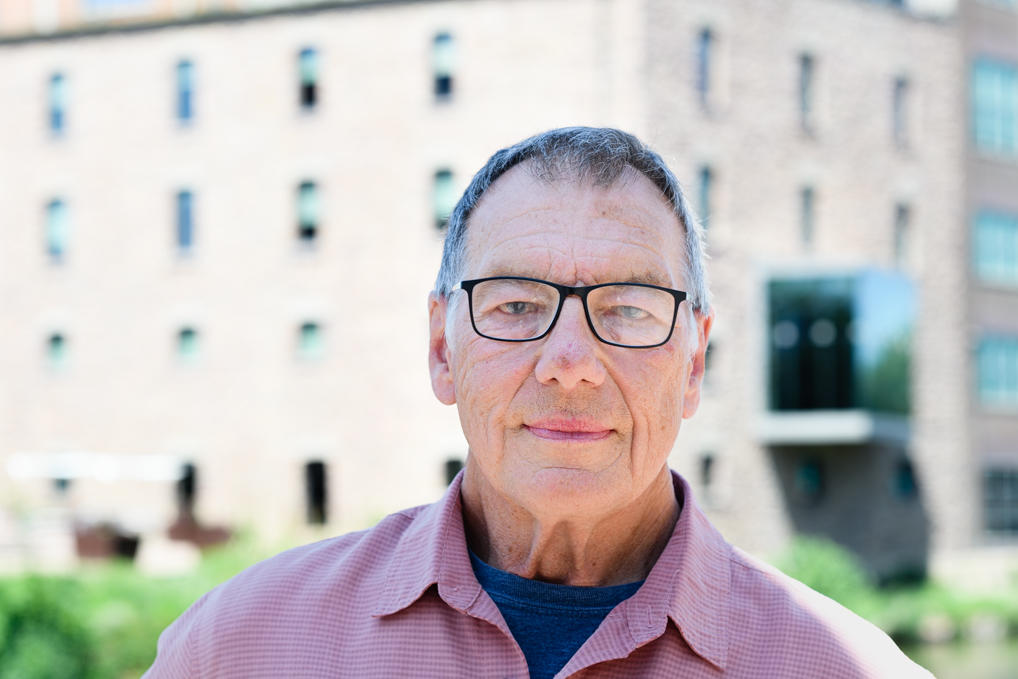
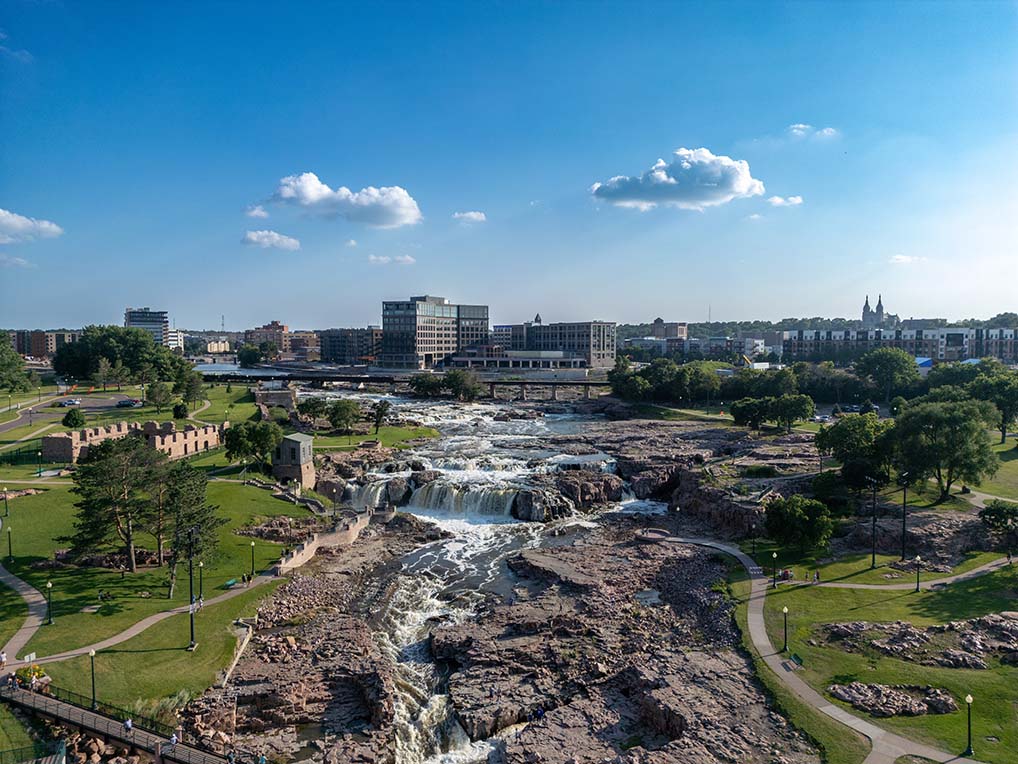
Peter Carrels, environmental activist, journalist, and author of Cascades of the Big Sioux River: A Natural & Cultural History, believes an extraordinary place like Falls Park of the Big Sioux River deserves special consideration.
“Rather than manage The Falls like scenic décor and a tourism magnet,” said Carrels, “we should preserve and protect the setting as a unique ecological and geological treasure.”
Carrels has a long relationship with rivers and environmental issues. His earliest environmental writing and reporting dates to the 1980s, and was published by High Country News, a magazine focused on the environment. He covered contentious, expansive topics such as oil drilling, mining, endangered species, water development, river management, hazardous wastes, and farming practices.
Before becoming a journalist, Carrels devoted his time to direct-action conservation, with much of his work centered on the James and Missouri rivers. He has worked closely with and for the nation’s leading environmental organizations.
“Rivers are seldom harmed by accident and never healed by magic. Citizens are learning that the condition of a river can be determined by choices, and those choices are based on social priorities and ideals.”
PETER CARRELS IN CASCADES OF THE BIG SIOUX RIVER
“I began writing articles because I was dissatisfied with news coverage regarding environmental issues,” explained the Aberdeen native. “I balanced work as both a writer and an activist through much of my career.”
Cascades of the Big Sioux River traces the natural and cultural history of The Falls, and spotlights key local activists, including Hazel O’Connor, an early environmentalist who was distressed about the degradation of the river and Falls. She advocated for a cleaner river and a park at The Falls, and built a coalition of river supporters to make that happen.
“Hazel and a handful of others were part of the rising environmental movement,” explained Carrels. “What that important movement accomplished in Sioux Falls and elsewhere deserves a revered place in the histories of our city, our state, and our nation.”
Carrels describes himself as a beneficiary of the back-to-nature movement of the early 1970s. He and his college friends discovered the joy and value of connecting with nature, undertaking long backpacking treks in remote wilderness areas across the West. He later found other outlets for his desire to experience the natural world.
“We can commune with nature wherever we can find it—state parks, city parks, an arboretum, a neighborhood, a backyard, a river like the Big Sioux,” said Carrels.
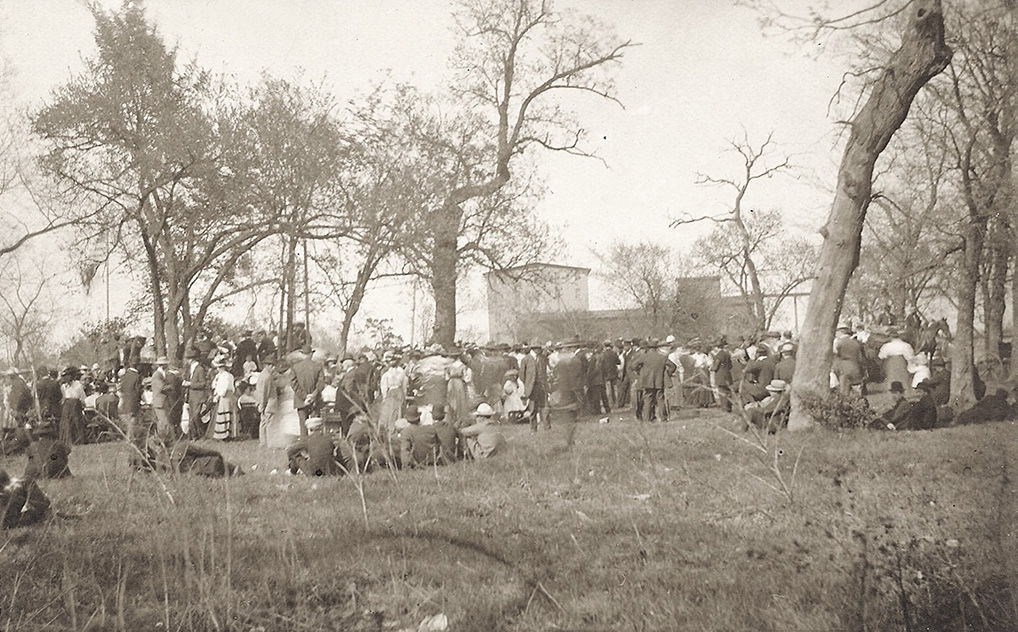
DID YOU KNOW?
There used to be a large, wooded island in the Big Sioux River near The Falls, described as “paradise,” before change to industrialization removed the island.
After moving to Sioux Falls with his wife in 2015, Carrels contributed to local conservation efforts as a board member of the group, Friends of the Big Sioux River (FBSR). One aspect of that volunteer work involved launching, producing, and writing the organization’s newsletter called The Otter. Exposure to issues, experts, and information while writing the newsletter led Carrels to write Cascades of the Big Sioux River, his third solo book.
According to FBSR executive director Travis Entenman, “[Carrels] brought experience and consciousness to the organization that helped sharpen our focus.”
Entenman, who has been affiliated with FBSR for over nine years, says sustainability of natural resources must be a communal effort, and nothing happens in a vacuum.
“Despite the important and positive work Friends of the Big Sioux River contributes, I think our community undervalues the organization,” declared Carrels. “No nongovernmental group of individuals in Sioux Falls or the watershed region is as poised and equipped to advise development and management strategies about what is the most important natural feature of our city and region—The Falls and the Big Sioux—as is Friends of the Big Sioux River.”
Through water quality testing, providing education, river restoration, and advocacy, FBSR is able to leave a long-lasting impact on the broader watershed area. Under Entenman’s steady hand, the organization has added important staff, increased community service, and monitored river health.
“While each organization might focus on different concerns, if one wins, we all win because our natural resources are all interconnected.”
TRAVIS ENTENMAN
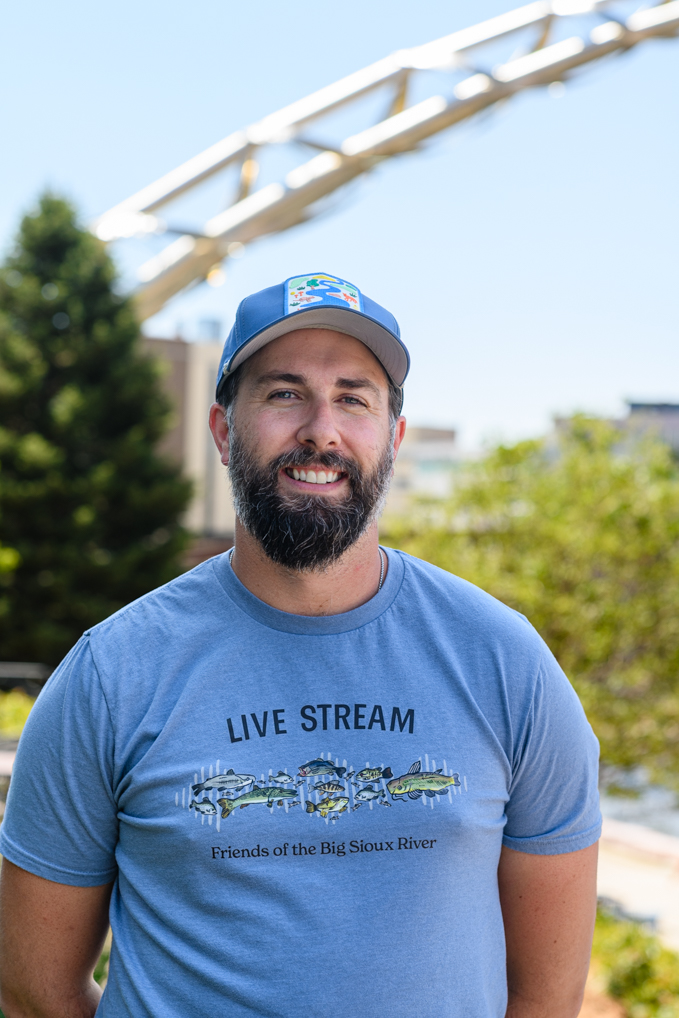
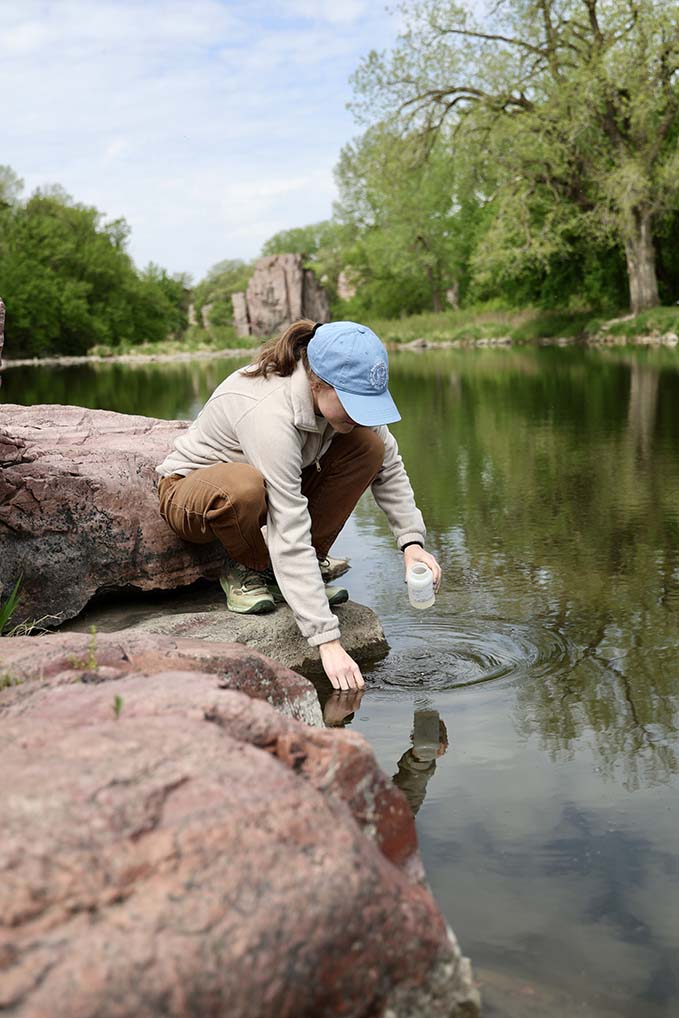
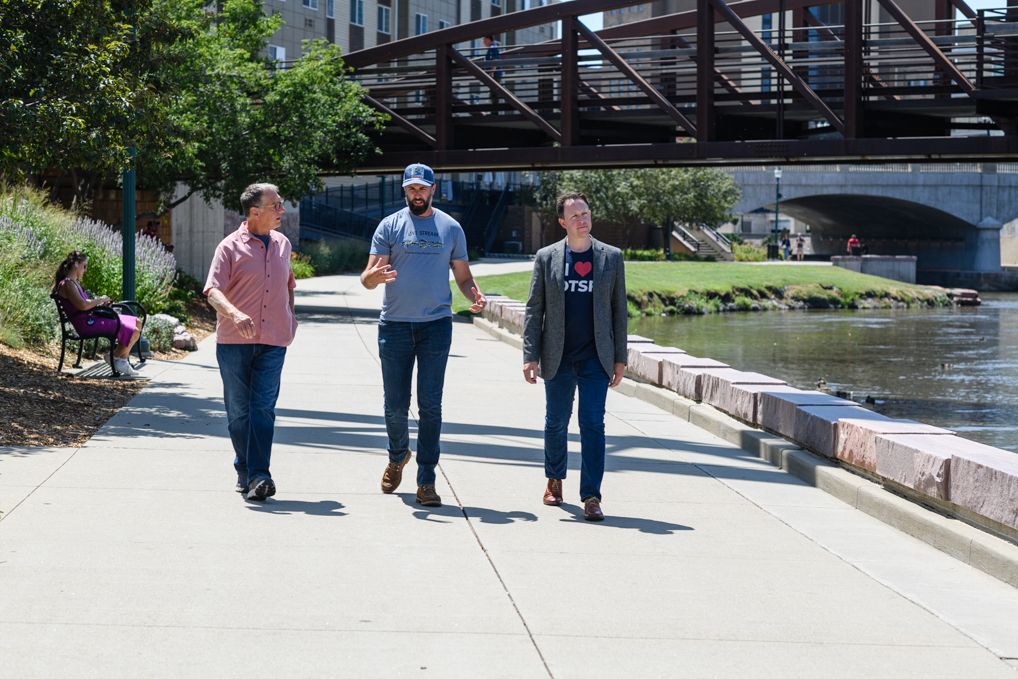
The executive director and his team work with the State of South Dakota’s Department of Agriculture and Natural Resources by collecting water samples looking at pollutant levels of E.coli, nitrates, and total suspended solids. By following the state’s guidelines, the data is used for trend analysis, letting the public know what is in the water.
The organization also works with the Sioux Falls school district and college students to educate them about the health of the ecosystem, bringing more awareness and resources to the classroom and beyond with field trips to local bodies of water.
“We believe the only way we can help improve our river is by working to establish sound policies and initiatives that directly impact water quality,” added Entenman. “We work with local, state, and federal lawmakers and agencies to promote sound, on-the-ground practices, and to bring more awareness and resources to our area.”
Entenman’s hope is to have a river everyone can be proud of, where families and friends can keep on recreating along the water safely.
“It’s our backyard, and I hope folks start to appreciate it as such,” said Entenman.
“The Big Sioux River is a great catalyst for us to meet.”
BRANDON HANSON
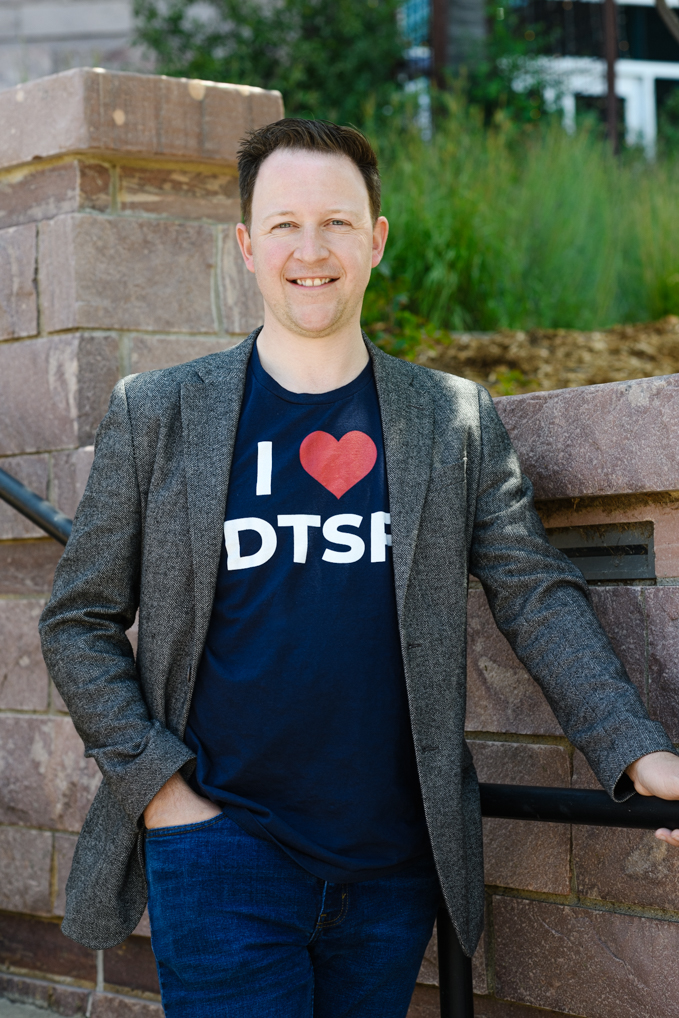
As a grassroots organization, Entenman says FBSR wouldn’t exist without the community’s support, endlessly inspiring them to continue their mission to “protect and restore the Big Sioux River and its watershed, improve the water quality, and educate our community to build a conservation ethic.”
Riverfest, the annual Downtown Sioux Falls (DTSF) event, is a chance for not only FBSR, but the public to actively engage and celebrate the Big Sioux River.
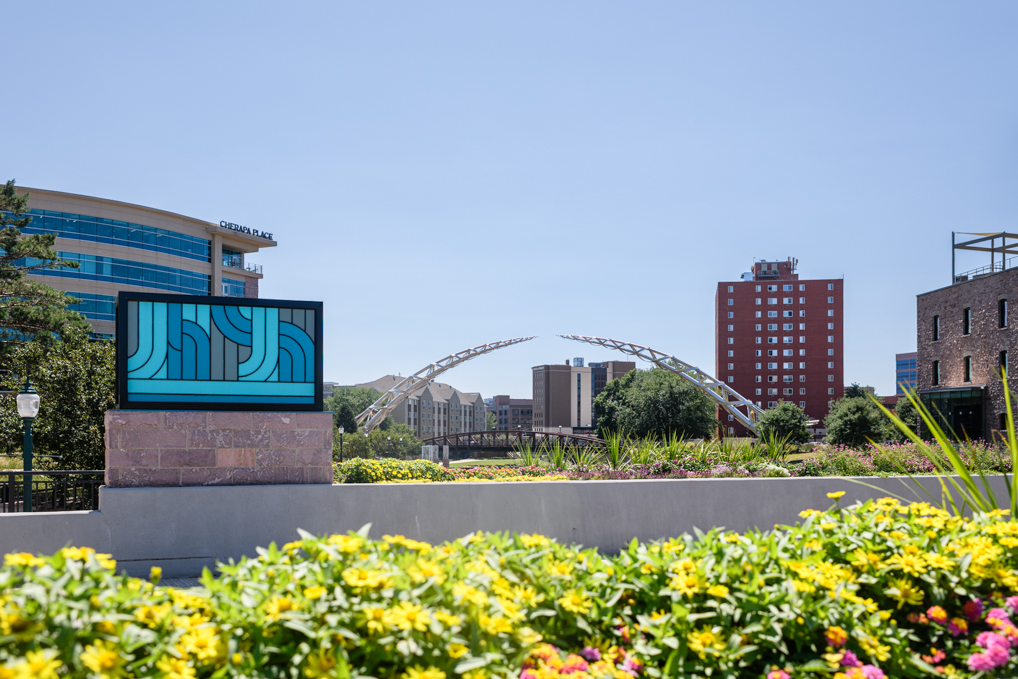
Downtown Riverfest has been around for nearly a decade, and through collaboration with organizations like FBSR and the expansion of the Cherapa Place campus, the event has added a fresh focus on sustainability and river stewardship, along with live music, plenty of food, local retail vendors, and fun activities for the whole family.
“We have many events throughout the year, but Riverfest is the one that brings people together around one of downtown’s greatest features—the Big Sioux River,” said DTSF CEO Brandon Hanson. “We’re lucky to live in such a vibrant and beautiful downtown with the river as a centerpiece.”
Hanson says the event creates an opportunity for folks to gather downtown and enjoy both the vibrant community and the beauty of the natural resources, a beloved feature of the city. This also includes the River Greenway, the natural landscaping, and in-full-bloom flowers cared for by both the Sioux Falls Parks Department and the DTSF Ambassadors.
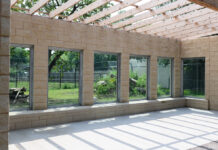
This year, the Amphitheater will be strategically designed and with a new shaded structure.
SAVE THE DATE
Downtown Sioux Falls Riverfest
September 19 // 3-8pm
Enjoy kayaking, craft beer, arts, crafts, games, education, and a dog fashion show at Cherapa Place in downtown Sioux Falls.
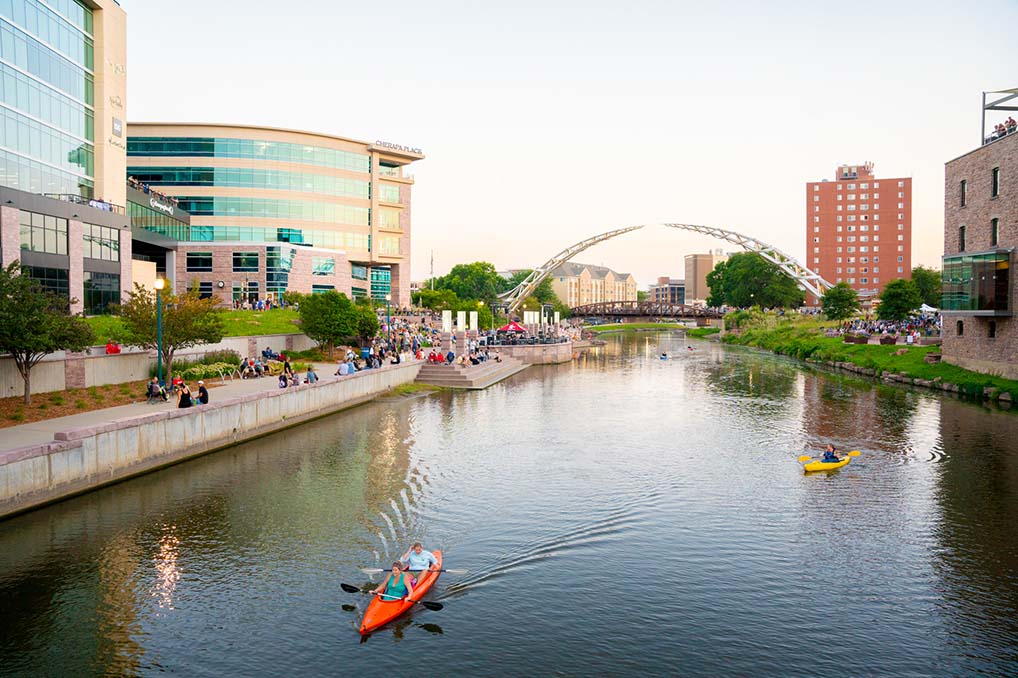
“With the refocus on the river and highlighting the good that comes from it, Riverfest offers us a chance to celebrate the river when it is often overlooked,” added Entenman. “It’s a day where everyone’s best friends with the Big Sioux.”
Entenman says nothing changes if you don’t show up, get outside, and actively participate in the positive impact individuals and organizations are making for the next generation, whether that’s writing a book to document history and educate readers, putting on an event to celebrate the river, or restoring and ensuring the health of the wider watershed.
“Nature usually has the final say,” said Carrels. “It is so much bigger and more lasting than human influences on our world. Our culture’s appreciation for environmental values is in its infancy.”
FOR MORE INFORMATION, VISIT FRIENDSOFTHEBIGSIOUXRIVER.ORG AND DTSF.COM+