
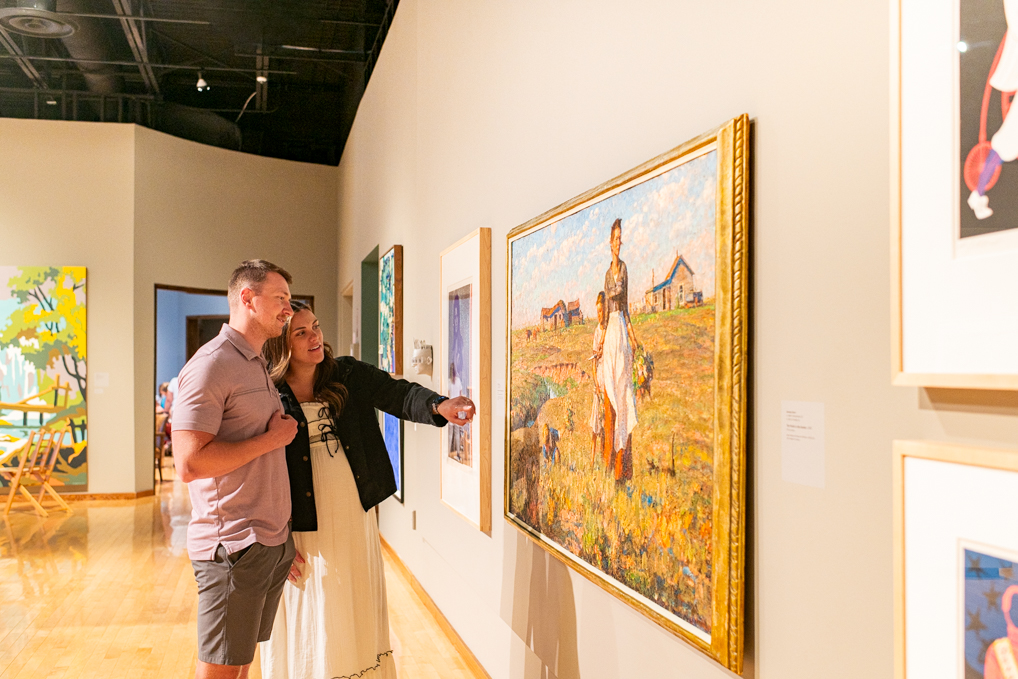
“Art has played an important role in shaping how America sees itself,” said South Dakota Art Museum director Donna Merkt.
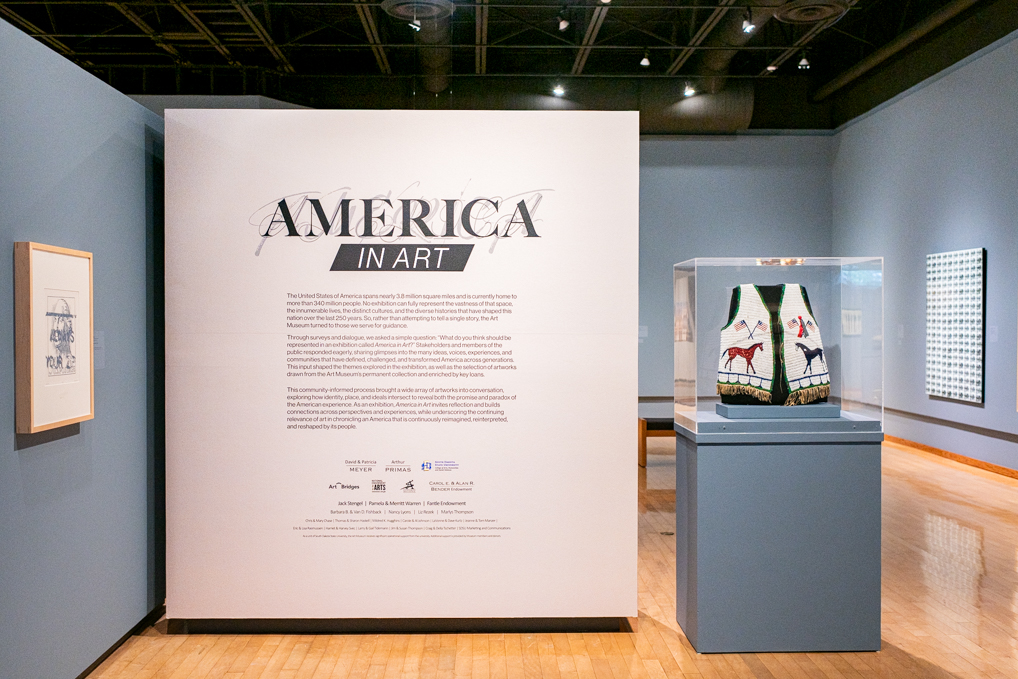
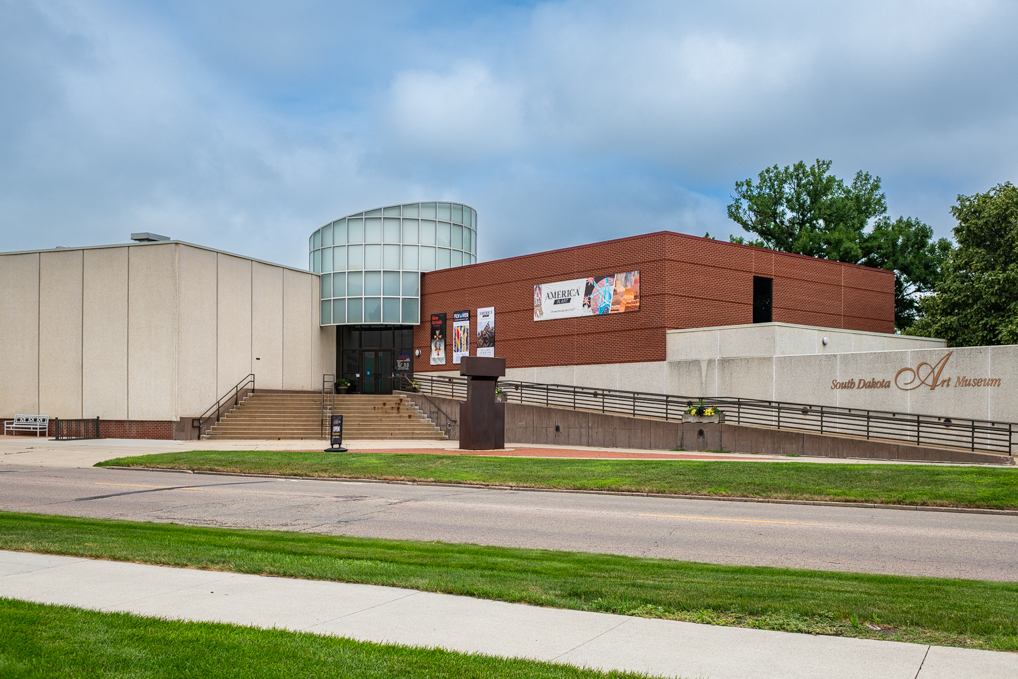
America in Art is an exhibition at the South Dakota Art Museum at South Dakota State University in Brookings running through January 2, 2027. The exhibition explores the people, places, ideals, contradictions, achievements, possibilities, and stories of the nation.
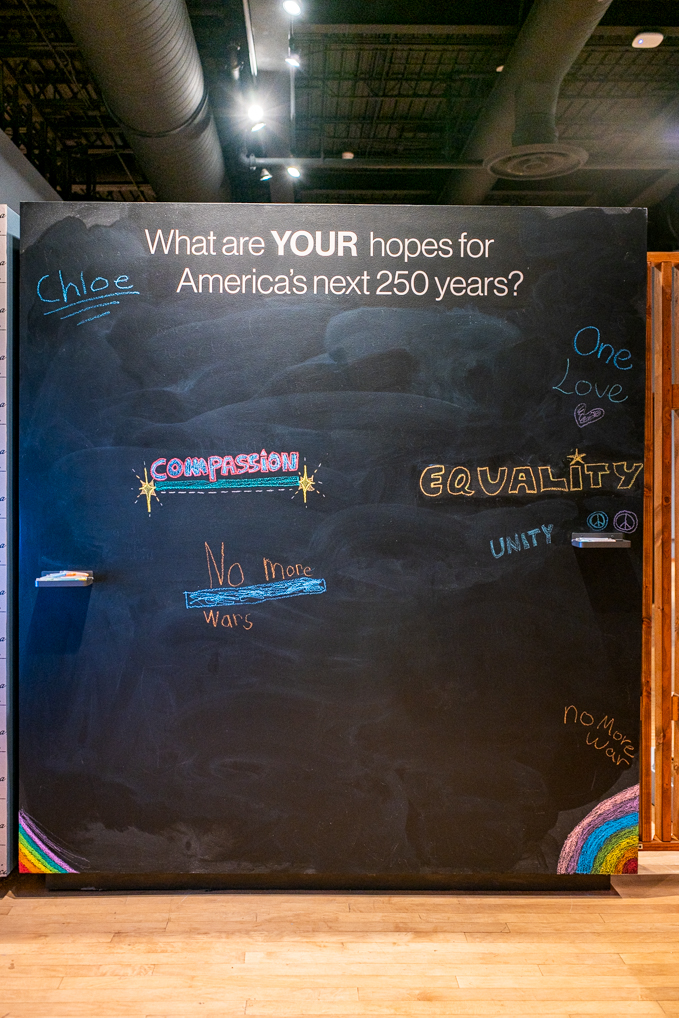
“Looking back at the last 250 years also asks us to look forward,” added Merkt. “The exhibition invites visitors to consider not only what America has been, but what we hope it might become over the next 250 years.”
Merkt emphasizes how vital art is to the development of our perceptions of the nation.
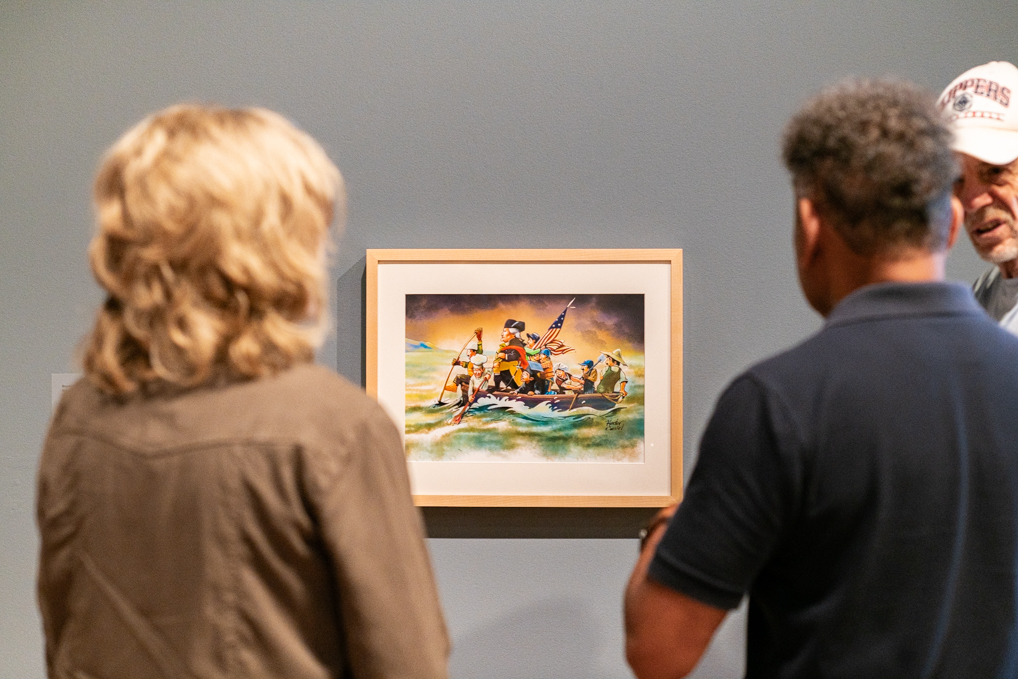
“We recognize the faces of George Washington, Abraham Lincoln, and other national figures in part because artists helped make those images familiar, repeatable, and symbolic, often with the support of public institutions,” she added.
For this exhibition, Merkt says the key question was not “What happened over 250 years?” but rather “How have people understood, experienced, imagined, challenged, and represented America?”

THE SOUTH DAKOTA ART MUSEUM’S HUMBLE BEGINNINGS
The South Dakota General Federation of Women’s Clubs members first imagined a permanent home for the visual arts in South Dakota in 1940. The museum was established by the South Dakota State Legislature in 1957 and opened in 1970. Today, it has significant, broad holdings including more than 7,000 works of art.
The exhibition is drawn from the museum’s collection, while also utilizing key loans with the goal of expanding the stories, themes, questions, and interests that emerged from a community survey conducted to help inform what people wanted to see.
In the survey, one question was asked of the public: “What should be included in an exhibition titled America in Art at the South Dakota Art Museum?”
In the responses, some hoped for celebration and patriotism, while others asked for South Dakota stories with depictions of landscapes, pioneer life, and agrarian life, according to Merkt.
Many respondents expressed they would like to see a complete view of the nation, including voices that have too long been left out of conversations regarding the United States, such as Native American perspectives and immigrant stories. The necessity for genuine and meaningful depictions of diverse communities and lived experiences was apparent.
“The responses revealed the complexity of the topic and confirmed the need for a broad, layered, and nuanced approach,” said Merkt.
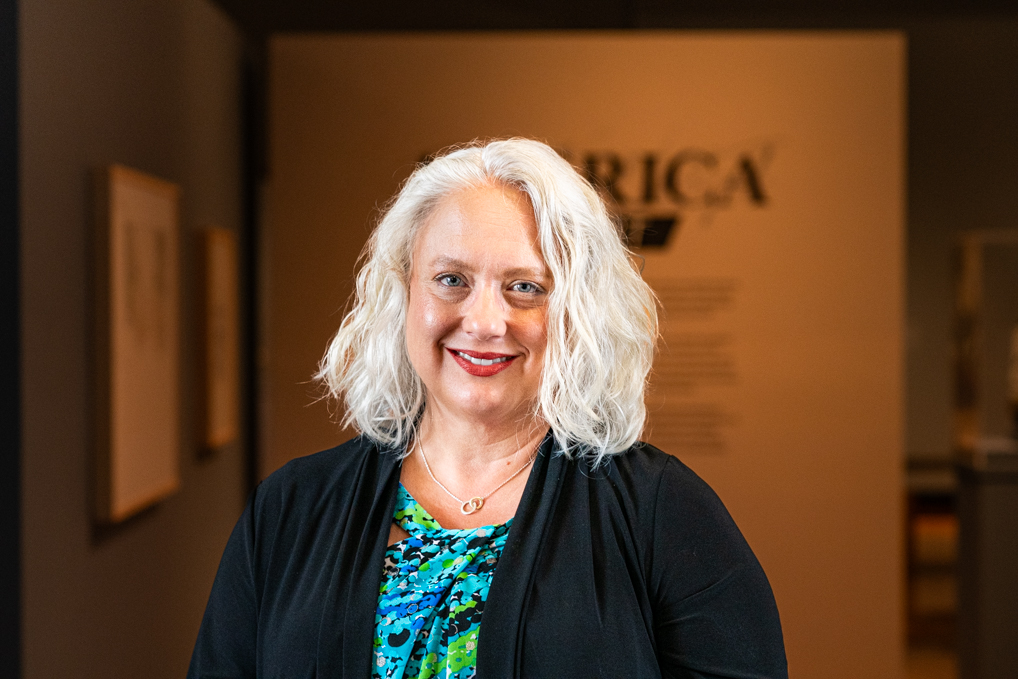
“A fuller representation of American art and experience makes the exhibition more honest, more layered, and more meaningful for the communities we serve.”
Donna Merkt
The survey also clearly communicated people wanted the lens to portray a South Dakota based framework. Merkt says this does not narrow the point of view, but makes “the national story more specific, grounded, and honest.”
“The exhibition is rooted in South Dakota, but it is not limited to South Dakota,” added Merkt. “It uses this place as a point of entry into a much larger national story.”
Many South Dakota artists are featured, as well as artists from other states, and people who immigrated to America—a range that matters when it comes to representing the full richness and breadth of the collective story.
“South Dakota is not outside the story of America,” clarified Merkt. “It is one of the places where national ideals and contradictions can be seen with particular clarity: in histories of Native homelands and broken treaties, westward expansion and settlement, farming and rural life, immigration and belonging, military service, incarceration, and environmental change.”
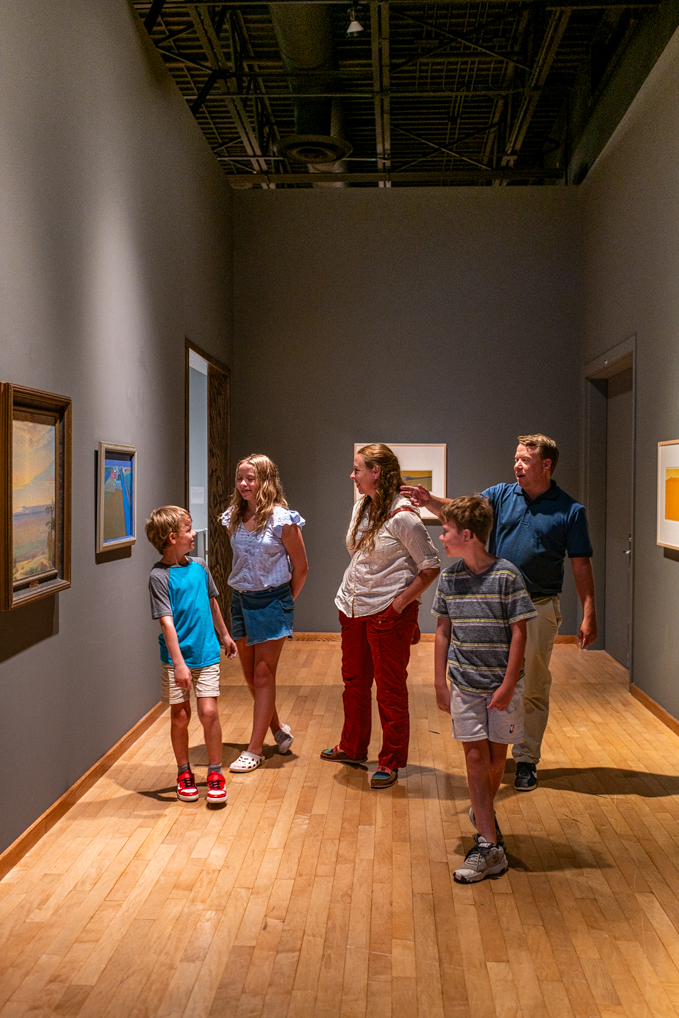
Artwork in the exhibition is not arranged chronologically as a “march through history,” but rather, centered around ideas, letting pieces from various eras speak next to one another, creating new conversations alongside different perspectives and places.
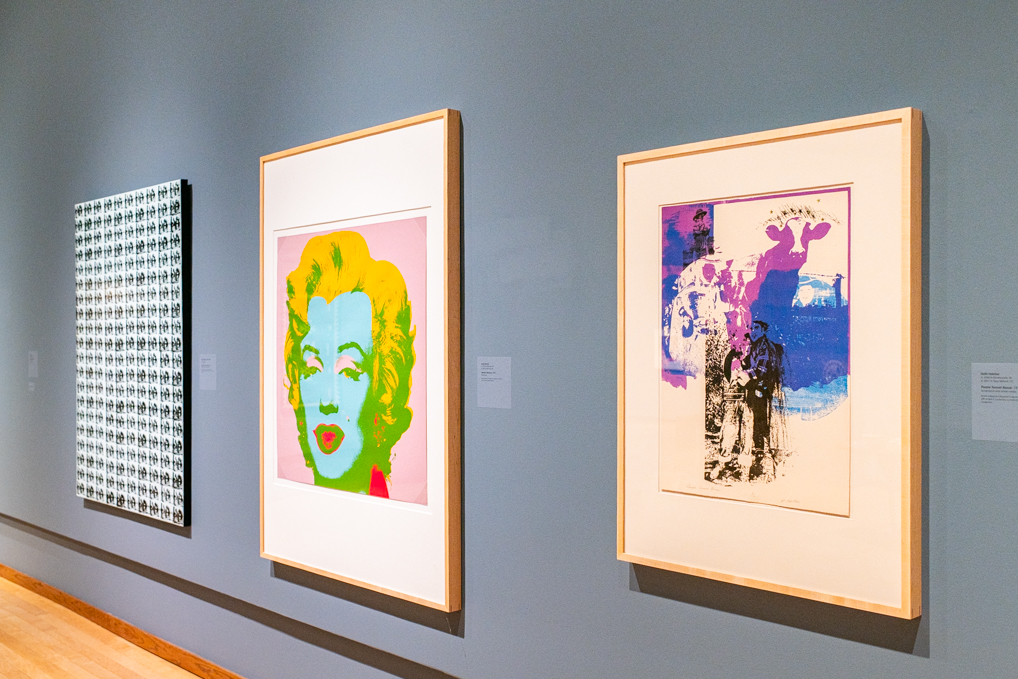
For example, Andy Warhol’s Marilyn Monroe is presented next to Oglala Lakota artist Keith BraveHeart’s 200 Horse Give Aways.
DID YOU KNOW?
Admission is free.
The South Dakota artist was inspired by Warhol’s work to create his piece, but Braveheart focused on the Oceti Sakowin cultural practice of giving, rather than the consumerism that was often Warhol’s subject.
The two pieces come together to create a new conversation “about image, identity, value, and what different cultures choose to recognize or elevate.”
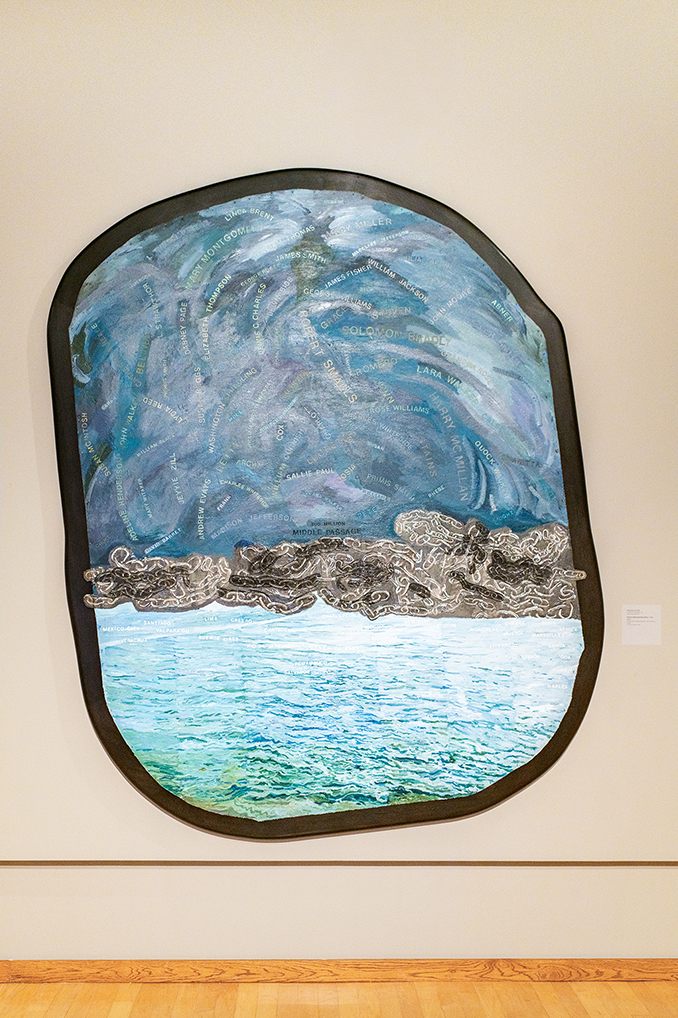
Howardena Pindell’s Slavery Memorial Narratives (on loan from the collection of Arthur Primas) is exhibited alongside a doll representing Scarlett O’Hara by Jerry Ross Barrish. This pairing conveys two very different visions of the plantation South, considering the distance between plantation mythology and historical reality.
“Pindell’s work asks us to see land and water as witnesses to history,” said Merkt. “Across the darkened sky, names appear like traces of lives carried through slavery’s violence and aftermath. Below, the names of slave ports locate that history geographically, tying the Middle
Passage and the transatlantic slave trade to specific places.”
A differing cultural memory is introduced by the reference to Gone with the Wind—one shaped by beauty, nostalgia, and inheritance. Placed near Pindell’s memorial landscape, that fantasy becomes harder to sustain.
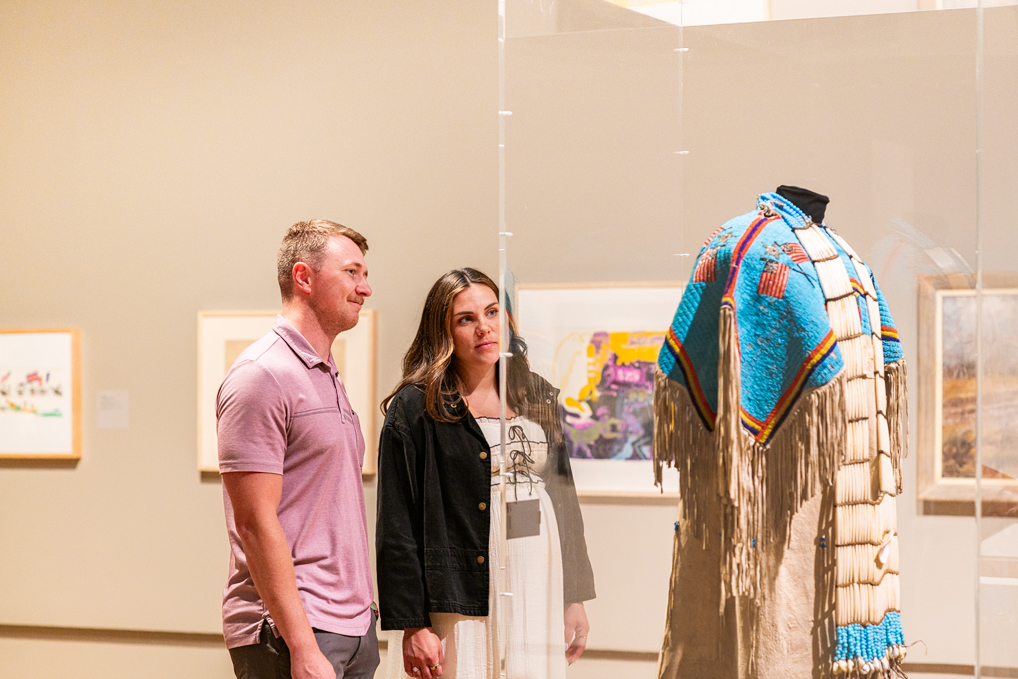
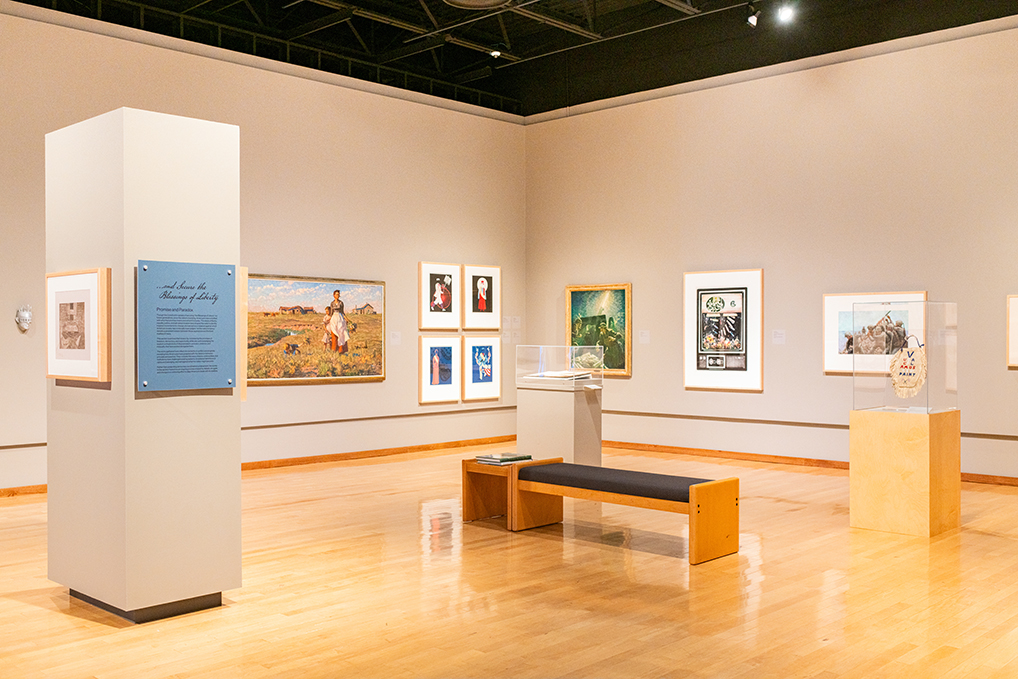
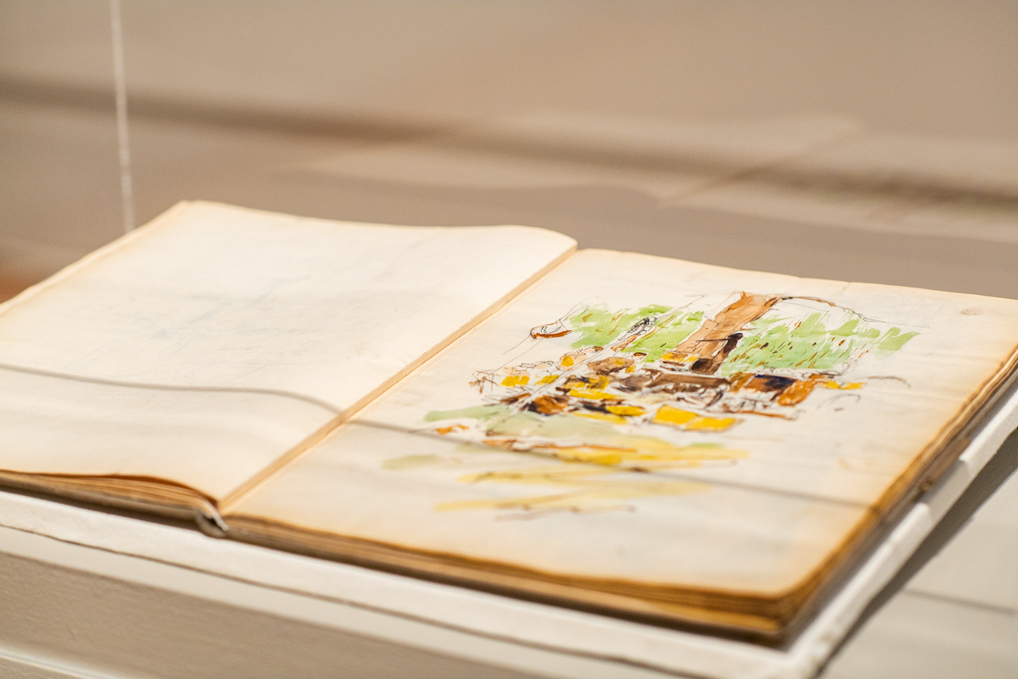
The exhibition is curated as three sections, using title language directly from the Constitution’s Preamble itself.
The first section titled We the People: Identities, Voices, Perspectives focuses on the “human side of the exhibition,” asking visitors to ponder how we come to understand who we are, belonging, and the connection to others.
“One of the things this section brings forward is that identity is not only personal,” revealed Merkt. “It is shaped through family, work, migration, tradition, community, popular culture, and the expectations placed on us by others.”
Merkt says this section is an invitation to think about self definition, visibility, belonging as an active thing to participate in, and the totality of voices making up America who have not been equally visible or valued.
The second section titled Of the United States: Land, Place, Power moves from people to place, Merkt says, considering “how land affects people’s sense of home, history, and connection to the nation.”
“Land in America is never just background,” said Merkt. “It carries memories. It supports livelihoods. It holds spiritual, cultural, and ancestral meaning.”
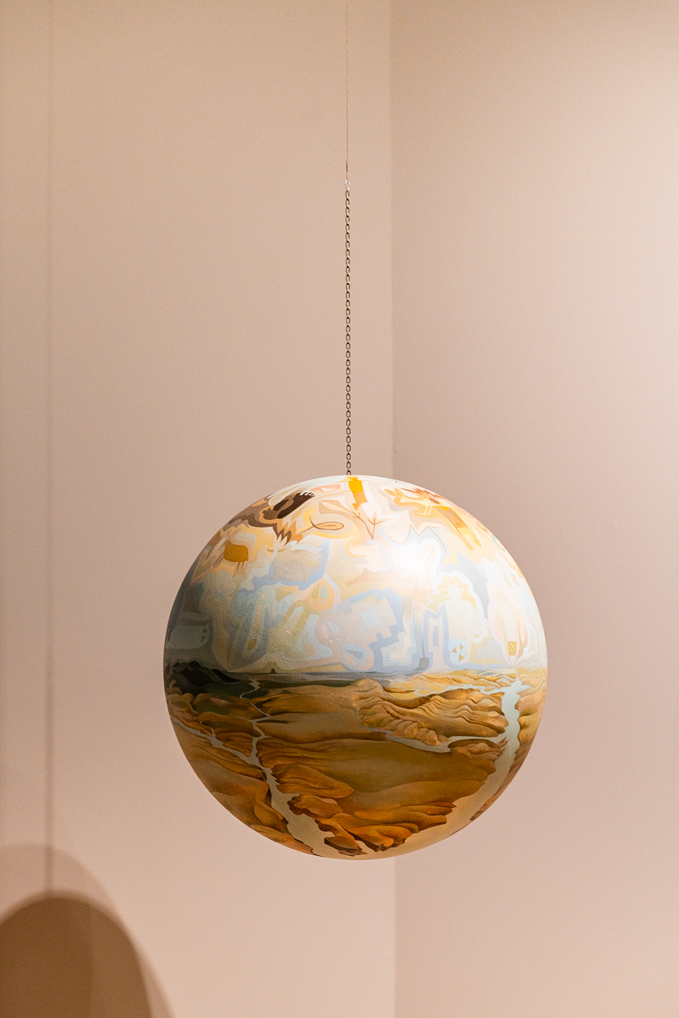
Labor, wealth, land, and violence are tied together, economically and morally shaping the United States—from Manifest Destiny, and the taking of Native homelands, to agriculture and plantation slavery.
“The section also asks who gets to call a place home, who is pushed out, who benefits from land, and who decides what is preserved, developed, remembered, or erased,” added Merkt.
This section asks visitors to consider how relationships between people and the planet shape life, and how the American story is influenced by the historical environments.
“Incarceration, borders, monuments, conservation, and environmental change show that land can be used to organize movement, control access, create public memory, or define responsibility,” said Merkt.
Finally, Secure the Blessings of Liberty: Promise and Paradox relies on “the ideals that have shaped American civic life” for definition. Those ideals include freedom, rights, opportunity, service, equality, and participation in democracy.
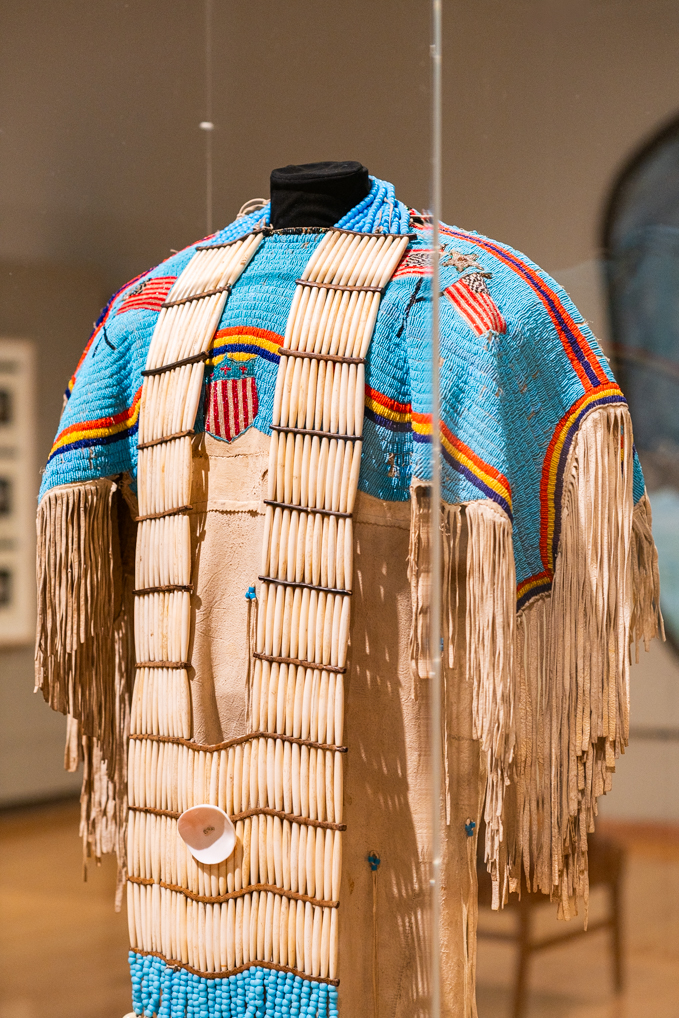
“This section considers American ideals alongside the realities that have complicated them,” clarified Merkt. “It includes works that touch on Native histories, including violence against Native peoples, while also acknowledging the long and significant history of Native military service.”
“The goal is to create enough range for visitors to see how these ideas exist together.”
Donna Merkt
Here in the exhibition, the American Dream is considered as it relates to immigrants, marginalized communities, and folks whose experiences have not matched that promise. Debates around freedom and responsibility are considered, bringing in conversations about perseverance, civic participation, and the ongoing pursuits of freedom, opportunity, and equality.
“The goal is to explore how Americans have wrestled with the meaning and limits of freedom,” added Merkt. “Across the section, the works point to moments when the blessings of liberty have been celebrated, defended, restricted, debated, or denied.”
How rights are defined, who has access to them, what responsibilities come with them, and how the promise of liberty has been experienced
in different ways, are all questions for visitors to consider in this section.
With layered, emotional tones, the exhibition has moments of creative, resilient, and beautiful commemoration, alongside points of processing difficult histories of exclusion and violence.
“America in Art stands out because it is both timely and deeply grounded in place,” added Merkt. “It marks the nation’s 250th anniversary, but it does not treat that moment as a simple celebration. Instead, it creates space for a fuller conversation about America’s ideals, histories, contradictions, and possibilities.”
FOR MORE INFORMATION, VISIT SOUTHDAKOTAARTMUSEUM.COM+